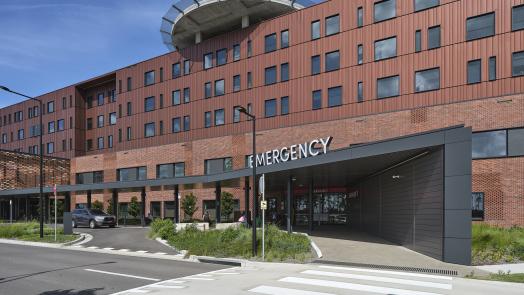
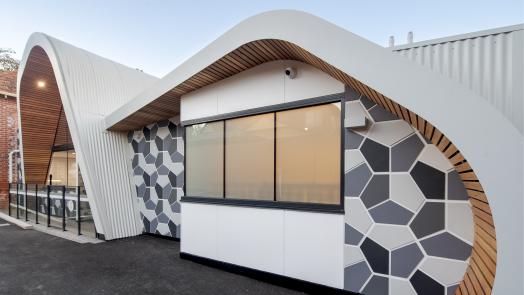
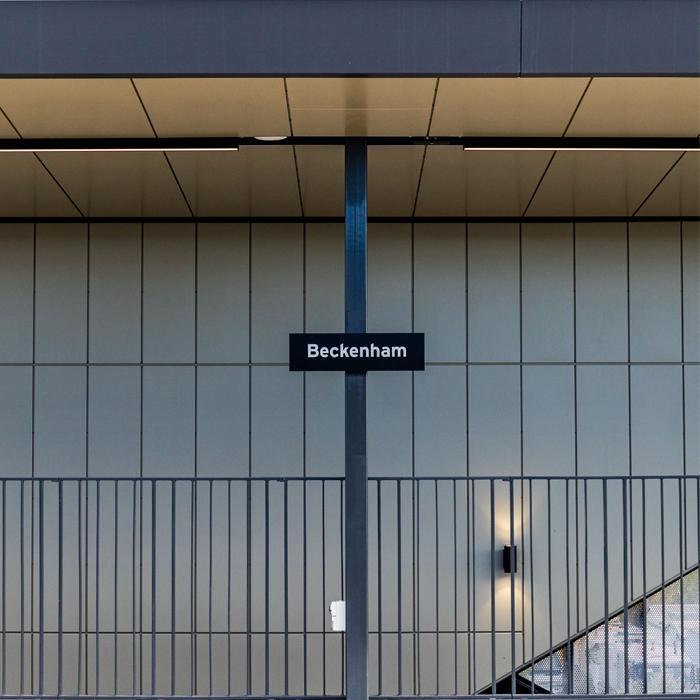
AZURE® steel cassette facade clad five new elevated Armadale Line stations in Perth (Carlisle, Oats Street, Queens Park, Cannington, Beckenham). Robotic Australian manufacture delivered 20,000+ sqm to a fixed line reopening date, giving Hassell crisp architectural lines, installers a lighter and faster system, and the PTA a durable facade. The largest AZURE® project in Australia to date.
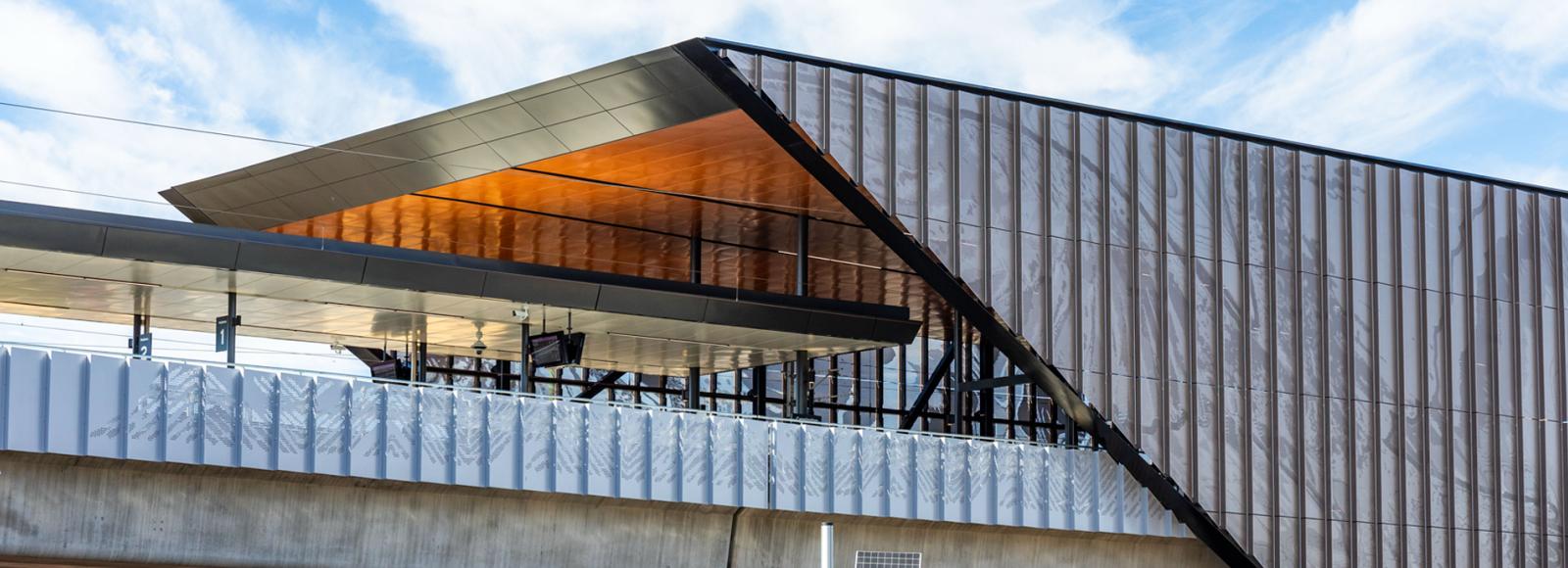

The Armadale Line Upgrade is one of the most visible pieces of public infrastructure Perth has delivered in a generation. As part of METRONET, the project raised the rail over the road across Perth's south east, removed level crossings that had split communities for decades, and opened up a seven kilometre linear park beneath the tracks. At its heart sit five new elevated stations, built at the same time, on a line that had been closed for construction and had to reopen on a fixed, non-negotiable date.
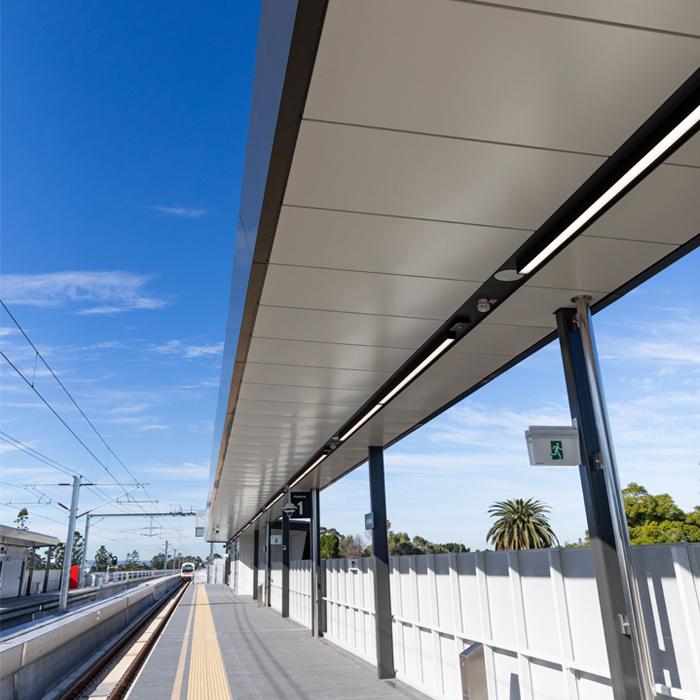
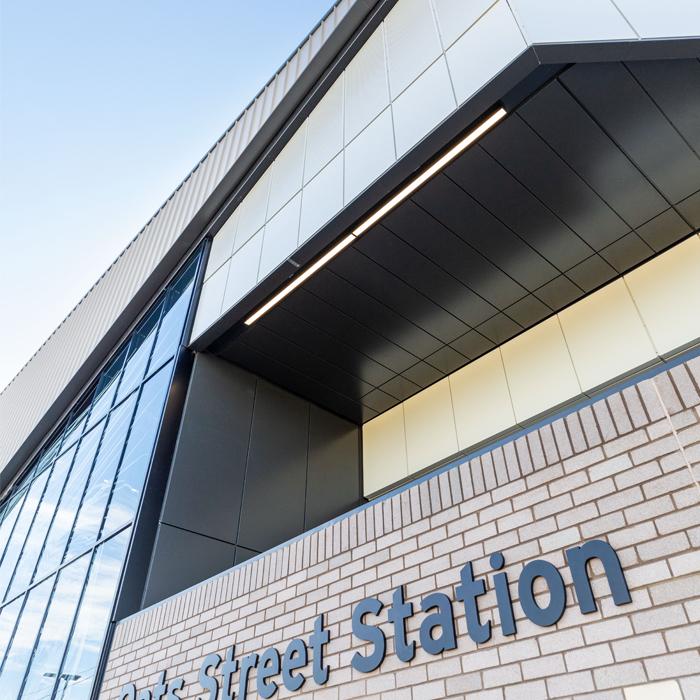
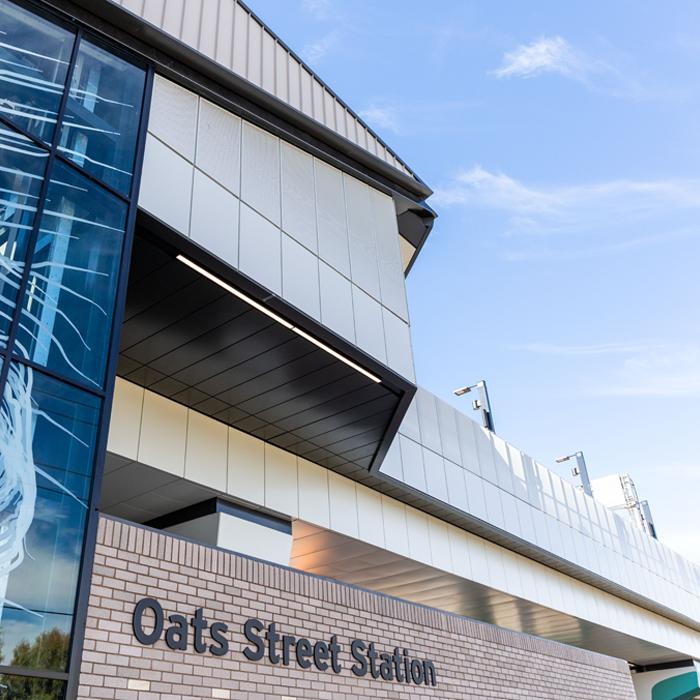
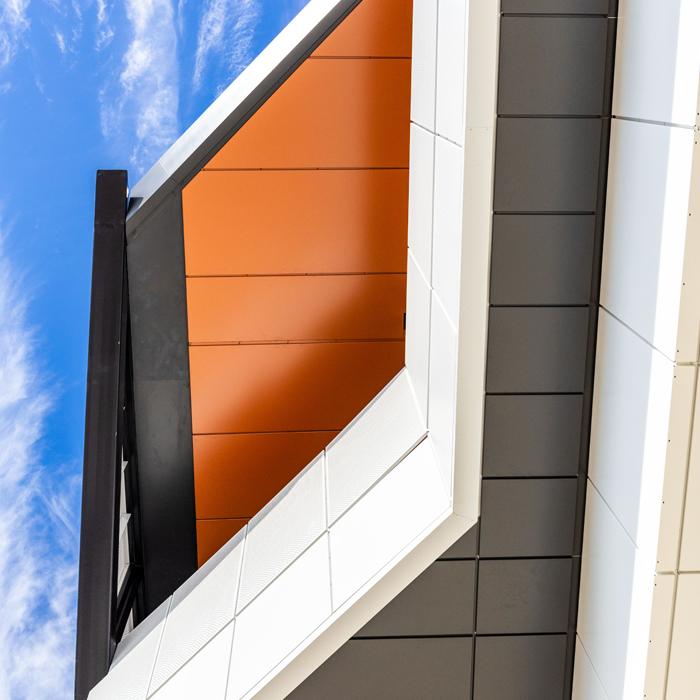
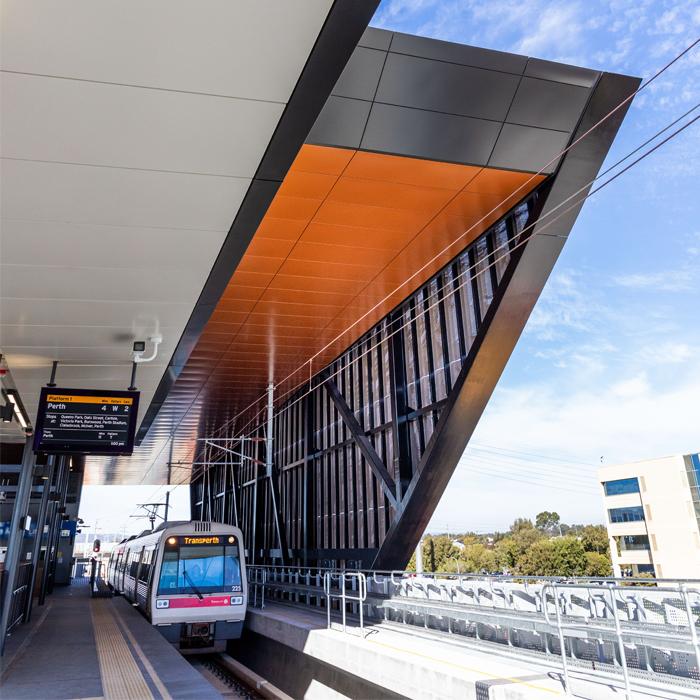
For the architecture team at Hassell, the five stations needed to do two things at once: read as one line, and still belong to their own suburb. The answer was in the facade. More than 20,000 square metres of LYSAGHT AZURE® steel cassette panels wrap the stations from Carlisle to Beckenham, making this the largest AZURE® project in Australia to date.
John-Paul Davies, Principal at Hassell, explained the design thinking:
“The stations sit on very large, heavy, monolithic infrastructure. The facade was our counterpoint to that: a refined, clean aesthetic that wraps over each station. We wanted a line identity you felt across all five, but we used materials and colour to ground each station in its own setting.”
Project background
The inner section of the Armadale Line had not been substantially upgraded in around 120 years. The old assets were simple platforms with small shelters, and the corridor was fenced off, cutting the suburbs on either side off from each other.
By elevating the rail, the project removed the level crossings and the vehicle interface with the trains, improved safety, and let the community move freely from one side of the corridor to the other. In place of a fenced rail reserve, residents gained parks, walking trails and public space that had never existed there before. Five stations were built concurrently, by different teams, most of whom were using AZURE® for the first time.
Lysaght solution
AZURE® came onto the project through an existing relationship. Adam Johnson-Kain from Lysaght explained:
“AZURE® first came about through Michael Letty, our facades manager, who had worked with Hassell on the Cross River Rail project in Queensland. It solved problems they had had on other WA rail projects, where traditional cladding profiles had to be imported. AZURE® is made here, and it is stronger.”
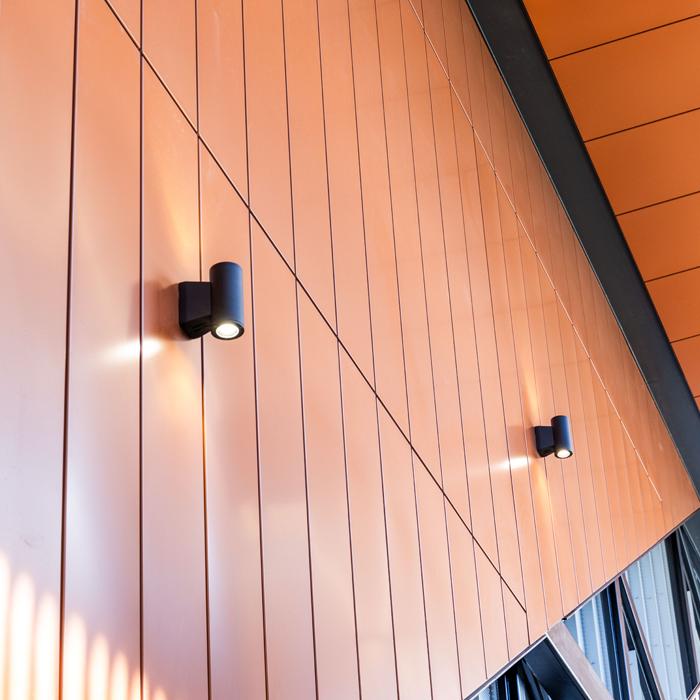
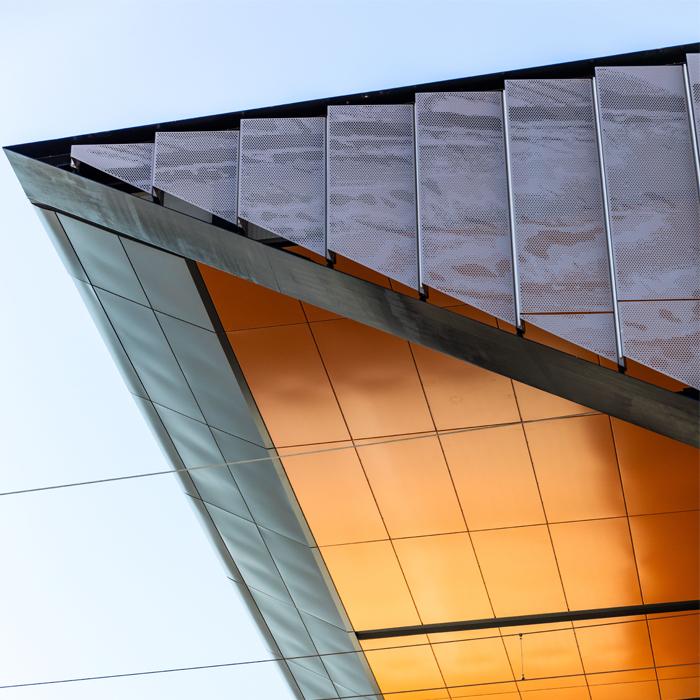
AZURE® is a steel cassette facade panel made from COLORBOND® steel in a 1.2mm base metal thickness. Each panel is folded from a single homogenous piece of steel on a robotic line, so the face, the returns and the fixing legs are all formed together. That gives the panels remarkable flatness and tight, consistent tolerances. As a ventilated rainscreen, the system does away with silicone jointing and reads as crisp architectural lines through the negative recesses between panels.
For a high-traffic public transport asset, specification confidence mattered as much as appearance. As part of a complete walling system, AZURE® can be specified where non-combustible materials are required under the National Construction Code, and its long-term durability is backed by the proven performance and warranty assurance of COLORBOND® steel.
The result was a fully tested, Australian-made facade system that delivered:
- Australian manufacture: panels made and pressed in Perth and across Australia, reducing freight and reliance on imported profiles.
- Speed at scale: offsite robotic folding – about one panel a minute – met a fixed, non-negotiable reopening date.
- Faster, lighter install: pre-drilled, overlapping, mastic-free panels can be lifted with two people instead of three.
- Precision and consistency: single-piece folded panels hold flatness and tight tolerances across runs of up to 150 metres.
For a project measured in the tens of thousands of square metres, the manufacturing approach was the deciding factor. As Adam put it:
“The panels can be folded in about a minute. Traditional methods involve a lot of manual cutting and folding around the clock to hit that volume. With AZURE® we did it offsite with controlled quality and delivered on time.”
Because Lysaght fabricates the panels, installers do not need their own factory to produce them, which widened the pool of contractors who could take the work on. For Hassell, the early technical engagement was as important as the product:
“We engaged the Lysaght technical team very early, talking through how the panels are fabricated, how supply works, and how they interlock. Through that engagement we got the confidence the product would do what we needed.”
Project execution
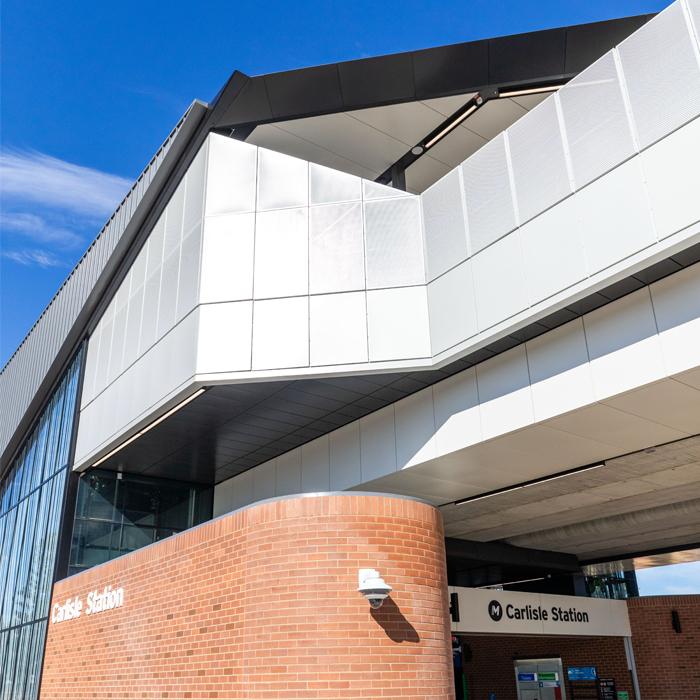
The scale was significant. Across the five stations, Lysaght detailed around 17,000 panels, each one resolved before manufacture by Rob Price and the technology team, with facades manager Michael Letty on site every few weeks to keep the work on track.
In some places the cladding runs for 150 metres, so consistency from panel to panel and station to station was critical. Hassell required prototyping and full-size interface details, working through flashings, corners, panel overlaps and the expansion details needed where the stations hang off the civil infrastructure.
For installer EXZO, the system changed the maths on site. Owner and Director Enzo Scarvaci:
”There is no mastic and no jointing. It is pre-drilled, it overlaps, and it is light – you can get the sheets up with two people instead of three, so you save on labour and cost. It made our life much easier than a standard aluminium system.”
Working around live rail, high rail access and a shutdown timeline added pressure, but the detailing carried the job:
“Access on the high rail projects was the biggest challenge. The Lysaght and AZURE® team ran the detailing and high-level drawings, and what they provided made the journey a lot easier.”
Outcomes
The elevated inner section of the Armadale Line opened in 2025, delivering five new stations and the public space beneath them, and the trains ran on schedule. Moving from station to station, the AZURE® cladding holds a uniform, clean finish across those long runs and is standing up to daily use in a high-traffic public environment.
The AZURE® facade delivered measurable benefits:
- On-time delivery: high-volume offsite manufacture kept the line's reopening on schedule.
- Lower install cost: lighter, mastic-free, two-person handling reduced labour on site.
- Long-term durability: COLORBOND® steel and the ventilated rainscreen keep maintenance minimal, with rainfall helping wash exposed elevations.
COLORBOND® steel gave the team confidence on durability and maintenance. As Davies explained, everyone is familiar with how COLORBOND® steel performs: Perth gets a lot of heat and sun, but the rain does a good job of cleansing the facade, so it can be maintained long term with minimal input from the client.
The Australian-made supply chain mattered to both the design and delivery teams. For Hassell it aligned with a local strategy that supports the economy and cuts freight. For EXZO, a 20-year business, it was a point of pride to use a product made and pressed in Perth and across Australia on a project of this scale.
Learnings
ALUA is a proof point for steel cassette cladding at infrastructure scale. Delivering a first-of-its-kind steel cassette facade across five concurrent stations, with multiple builders and installers new to the product, and doing it in under a year, showed the manufacturing and technical model can meet demanding public infrastructure requirements. Adam summed up the takeaway in one word:
“Confidence. Confidence in a new product, in steel cassette cladding, in COLORBOND® steel, and in Lysaght to deliver on major projects. We have achieved it, and we can deliver it again.”
Conclusion
The Armadale Line Upgrade set a benchmark for how a premium steel facade performs when the brief is unforgiving: large volumes, tight tolerances, concurrent sites and a reopening date that could not move. AZURE® gave Hassell the crisp, contemporary lines the stations needed, gave installers a lighter and faster system, and gave the Public Transport Authority a durable facade built for a public environment. As the largest AZURE® project in the country, it points the way for other transport authorities and state assets considering steel cassette facades.
Frequently Asked Questions
ALUA rebuilt the inner Armadale Line in Perth as part of METRONET, elevating the rail and delivering five new stations from Carlisle to Beckenham. More than 20,000 square metres of AZURE® steel cassette panels clad those stations, making it the largest AZURE® project in Australia to date.
Each AZURE® panel is folded from a single piece of COLORBOND® steel on a robotic line, so the face, returns and fixing legs are formed together for exceptional flatness and tight tolerances. Where older systems rely on installers cutting and folding panels by hand, AZURE® arrives ready to fix, and as a rainscreen it removes silicone jointing to leave crisp shadow lines between panels.
A rainscreen separates the outer panel from the structural wall with a cavity, so any moisture from rain or condensation can drain and evaporate. That improves weather tightness and can lift thermal performance, while the mastic-free joints keep a clean, consistent look in a high-traffic environment that takes daily knocks.
The panels are fabricated offsite on a robotic line, with one panel folding in about a minute, so Lysaght could produce high volumes at consistent quality and deliver to program. On site the pre-drilled, overlapping panels are light enough to lift with two people rather than three, which sped installation across five stations built at the same time.
Yes. AZURE® suits any project with large surface areas where alignment and colour drive the design, from commercial and civic buildings to education, health and transport. Panels can run in landscape or portrait, come in a broad COLORBOND® steel colour range, and as part of a complete walling system can be used where non-combustible materials are required by the NCC.
AZURE® panels are strong, lightweight COLORBOND® steel built for a long service life, backed by the drainage and drying benefits of the rainscreen behind them. Maintenance is minimal, and in exposed positions rainfall helps wash the facade, so the premium finish holds up with little ongoing input.