Project background: Setting the scale and expectations
Western Sydney International (Nancy-Bird Walton) Airport is a $5.3 billion Australian Government-funded project being delivered by WSA Co at Badgerys Creek, due to open in 2026.
As one of the country’s largest infrastructure investments, the airport sits at the centre of a broader program of transport and precinct development designed to meet Sydney’s growing aviation needs and support long-term economic growth in Western Sydney.
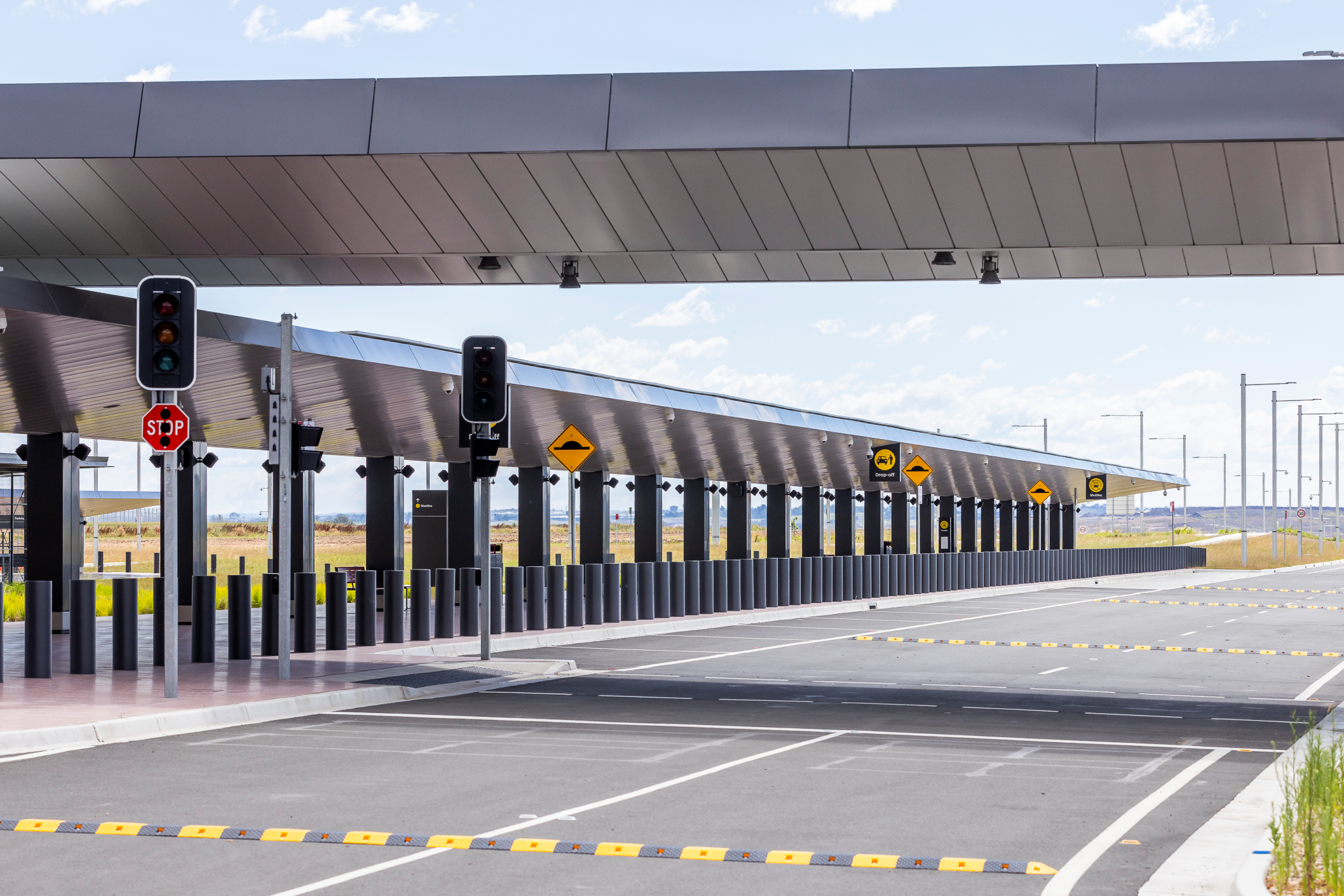
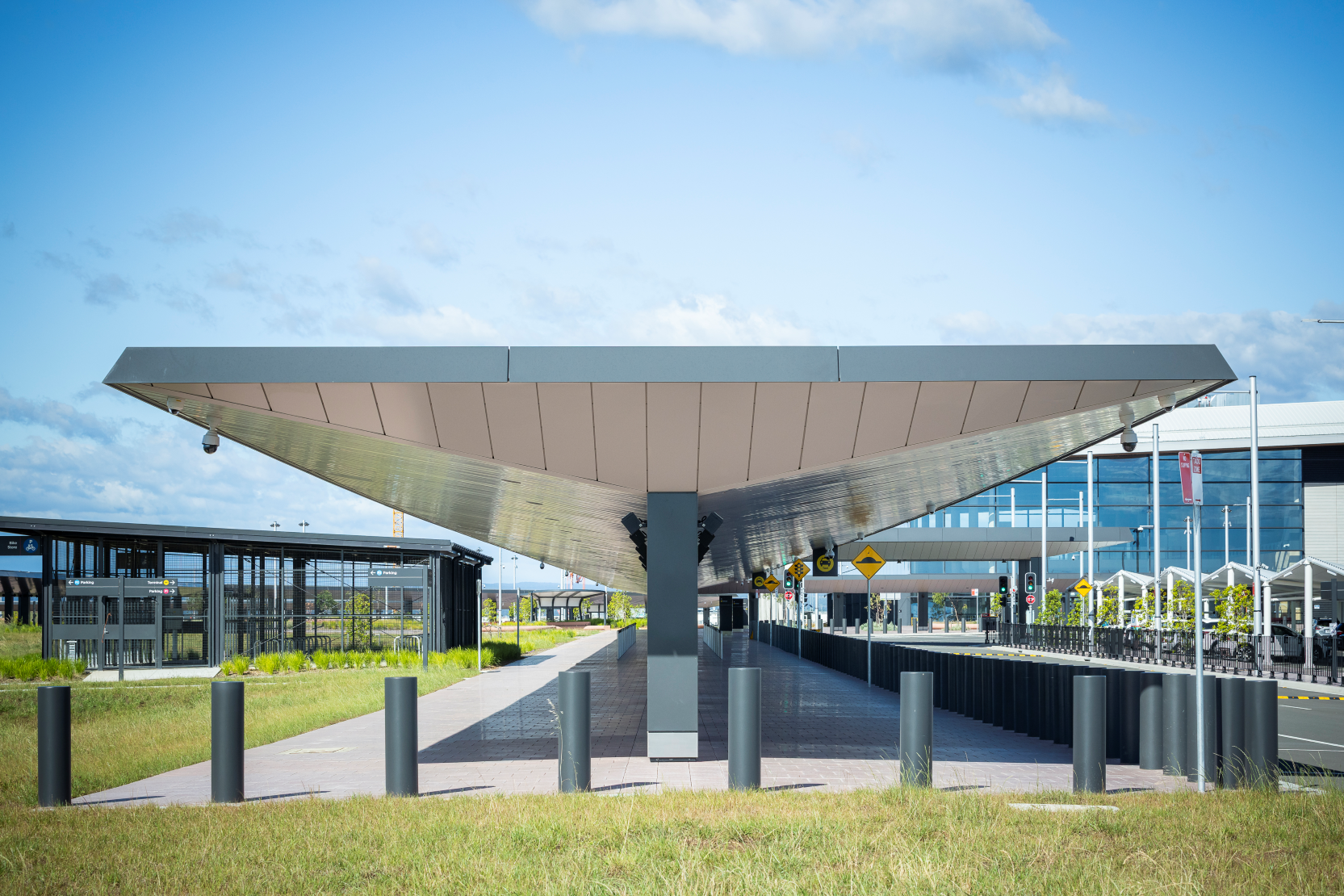
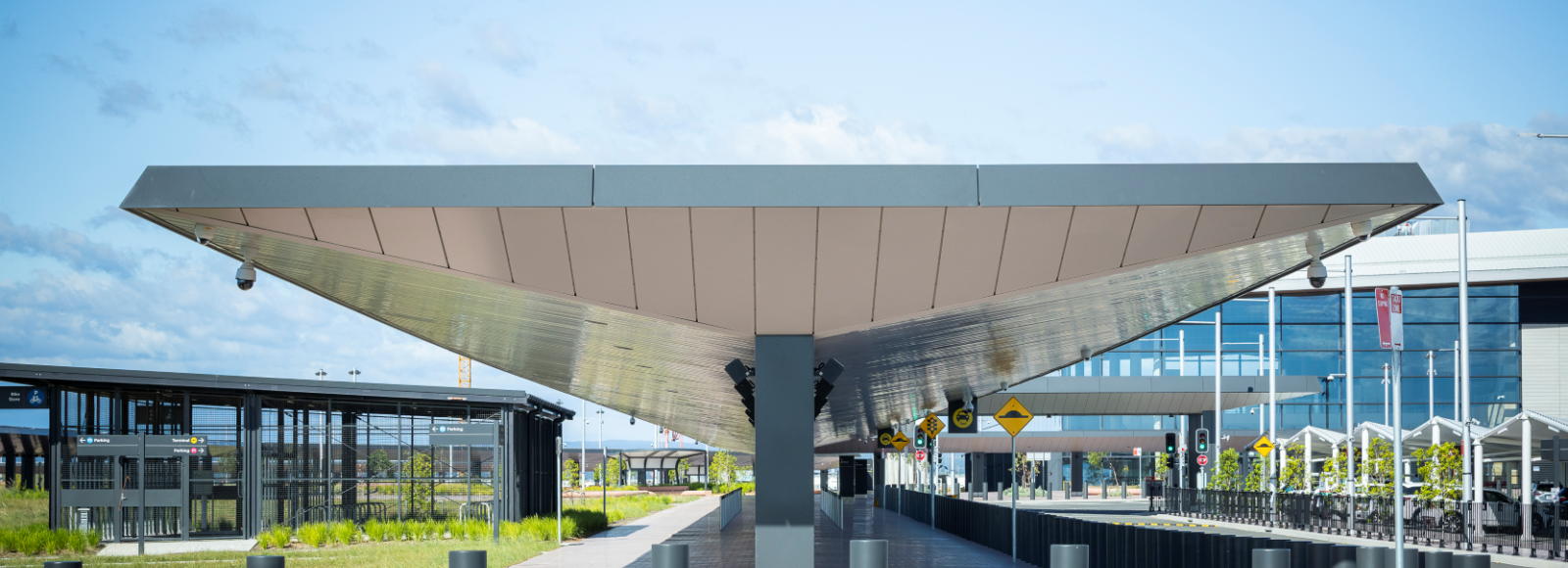
Within this context, every element is built to perform at scale. Even the covered walkways form a critical, high-traffic connection between the Metro Station, car parks, arrivals, departures, and the terminal.
The brief called for a soffit solution that would disappear into the architecture, adding durability and function without drawing attention.
Lysaght solution: A wall product, taken overhead
The covered walkways required a soffit solution capable of delivering long, flat runs, tight visual tolerances, and durability in an exposed public environment.
Lysaght supplied the HORIZON® panel system, selected for its wide, flat pan profile and ability to maintain alignment across extended spans.
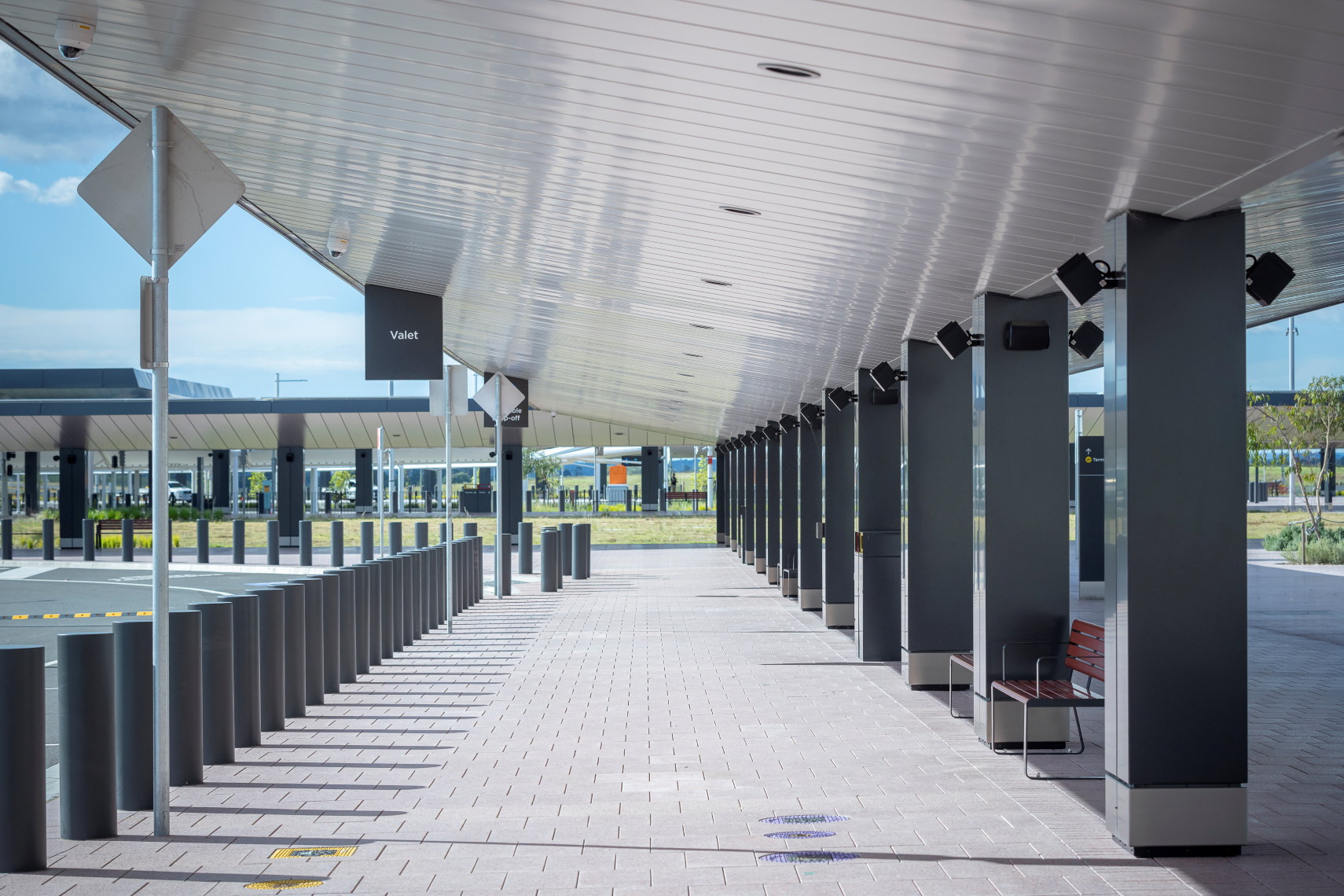
With a 485 mm pan width, 500 mm cover, and average sheet lengths of approximately 5,100 mm, the system supports clean lines and consistent soffit planes across the length of the walkways. Installed overhead, the panels provide a robust steel solution suited to high-traffic infrastructure.
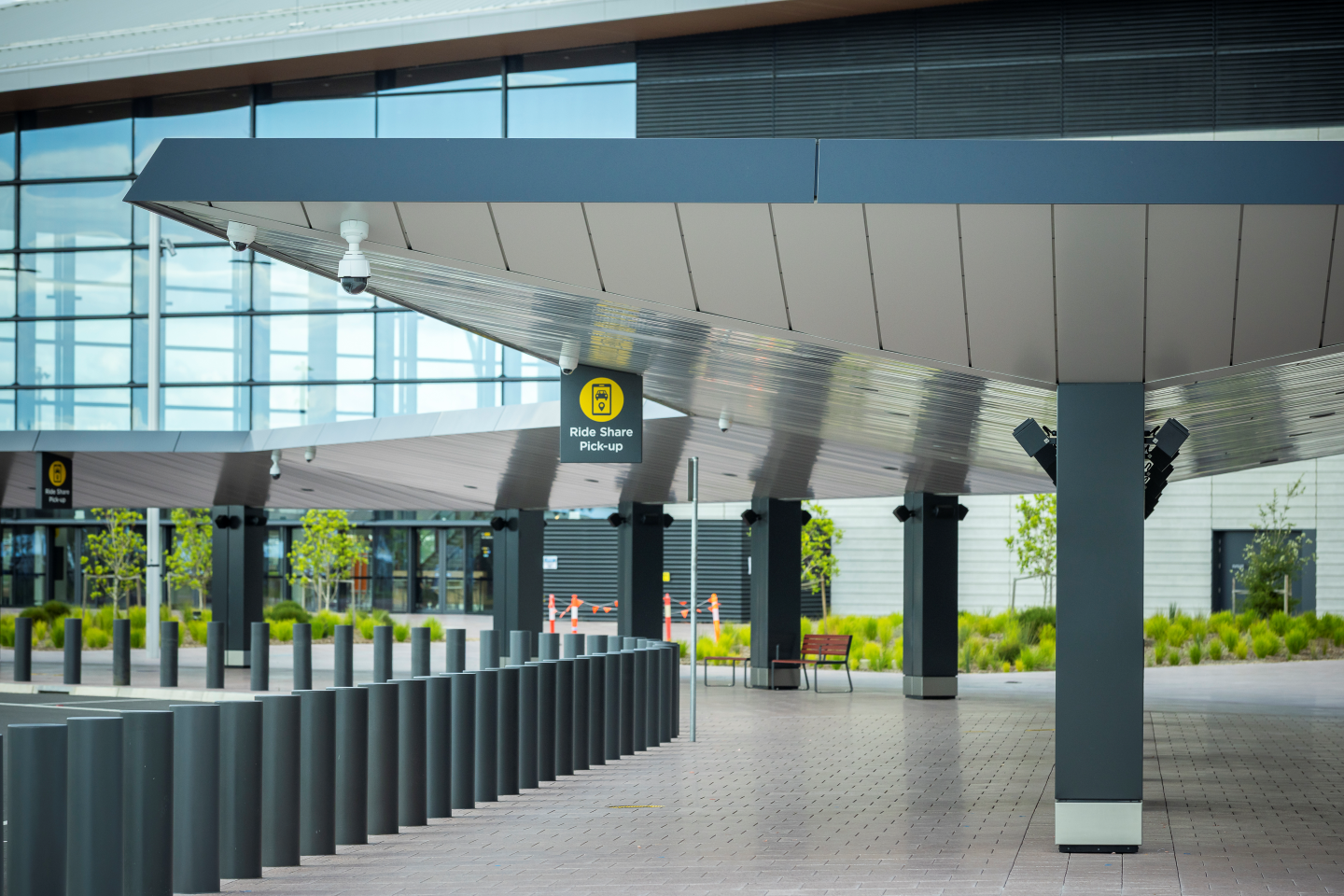
The system was adapted to include factory-manufactured access panels for discreet servicing of lighting, security cameras, and services, along with special angle-cut panels for end conditions and transition areas.
Michael Gairns, Lysaght, explained:
“Western Sydney International Airport demanded a soffit solution that could perform at scale while meeting very tight visual and tolerance expectations. The HORIZON® system gave us the flatness, durability, and adaptability needed to support both the architectural intent and long-term operational requirements of the airport.”
Project execution: Solving for millimetres in a live construction environment
Installing a wall cladding profile overhead across hundreds of metres introduced a new level of complexity. The covered walkways sit in full public view, and any variation is immediately apparent.
Anwar Gourani, Site Manager for Multiplex, explained:
“The covered walkways are a highly visible part of the Western Sydney International Airport precinct, and consistency across long runs was critical. The soffit system demonstrated strong buildability and delivered a high-quality, durable finish aligned with the standards expected of major transport infrastructure.”
That visibility placed extreme pressure on tolerances. On long spans, even minimal deflection became amplified. Three or four millimetres of sag might be acceptable elsewhere. Here, it was not.
Project Engineer and Coordinator, Yubo Wang, Buildup Interior, explained:
“We’re talking 3-4 mm of sag, but for the new Sydney Airport project, expectations are a lot higher, and it’s simply not something you can ignore,” said Wang.
What shifted the project forward was collaboration. Buildup Interior brought in experienced installers from other sites and worked closely with Lysaght’s Design Solutions Group, with constant site reviews and adjustments over several months.
“What made the difference was the people. We pulled experienced installers in from our other job sites and worked closely with the Lysaght engineering team. There were countless site discussions, inspections, and adjustments, and it took months to get it right,” Wang explained.
All of this unfolded within an intensely congested construction environment. Above the soffit sat electrical, communications, plumbing, solar, speakers, and cameras. Below it, paving and landscaping. Bays were shared work zones. Sequencing changed weekly.
From a supply perspective, Lysaght coordinated production and transport to suit restricted access conditions. Panels were delivered via small rigid trucks, unloaded using approved lifting equipment, and distributed across multiple zones as they were progressively released by other trades.
Outcomes: Consistency delivered at scale
Today, the finished walkways read exactly as intended; straight, flat and consistent. The soffit plane holds under changing light. Joint lines remain even across long distances. Access panels disappear into the system.
“What stands out is the uniformity… over that distance, any small variation multiplies, but it still reads straight, clean, and consistent,” said Wang.
Multiplex noted the system’s reliability and buildability, alongside the value of consistent supplier support and coordinated deliveries to maintain programme momentum.
“From a construction perspective, the soffit installation required careful coordination across multiple trades and work zones. The ability to maintain quality while supporting programme delivery was a key,” Gourani noted.
For passengers, the result is understated. Most will never notice the soffit. They will move through the space comfortably and without interruption.
Learnings: Prototype early and expect the unexpected
This project reinforced several hard-earned lessons:
- Products adapted beyond their typical application require early prototyping and flexibility once real-world behaviour becomes apparent.
- At infrastructure scale, small tolerances have outsized visual and performance impacts.
Factory-manufactured solutions are critical for reducing site risk and maintaining programme certainty. - Disciplined execution underpins quality at scale, with consistent methods, checks, and standards applied across every bay, every day.
As Wang noted: “Factory-made accuracy reduced site risk, and pre-cut detailing saved labour and time, and together they turned a potential programme-breaker into something we could actually deliver.”
Conclusion: A solution that disappears
“This project was a strong example of collaboration in action. Working closely with the installer and builder allowed us to refine the system, resolve challenges early, and deliver a soffit solution that met the expectations of a nationally significant airport project", said Michael Gairns.
Delivered under intense scrutiny, they provide a durable, serviceable, and visually controlled solution that supports both passenger movement and long-term airport operations.
“Once it’s open to the public, most people will walk through and never think twice about it… but we’ll know,” said Wang.
And that is the measure of success on a project like this.