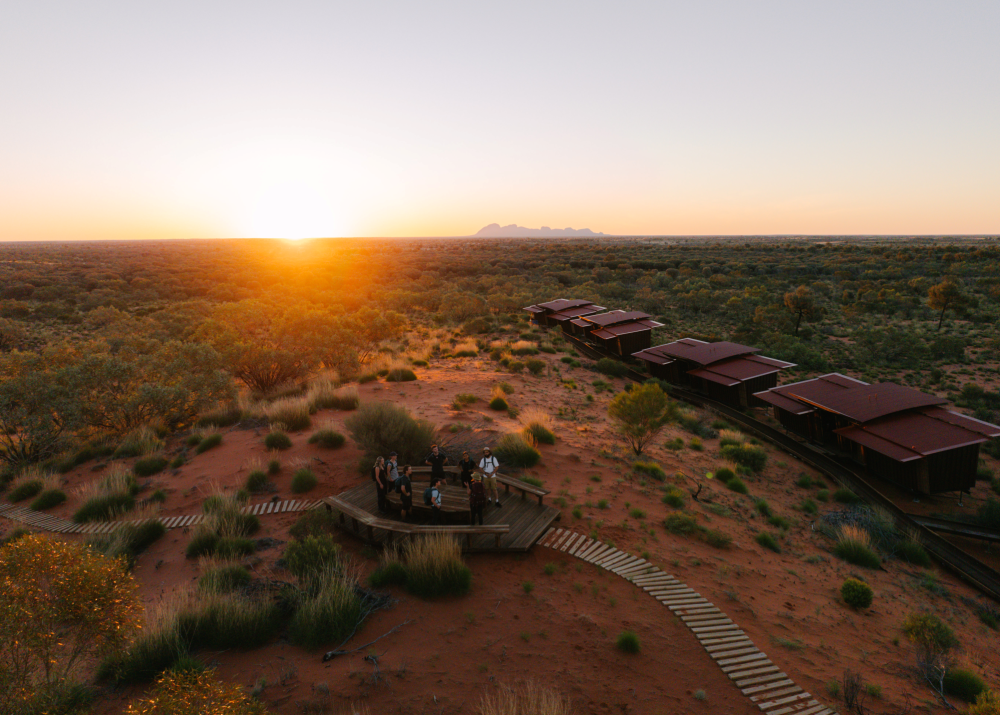
Discover how LYSAGHT CUSTOM ORB® and KLIP-LOK® roof cladding were used in the construction of the accommodation for the Uluṟu-Kata Tjuta Signature Walk. The architectural design of the modular accommodation pods pays deep respect to Country by achieving aesthetic harmony with its surrounding landscape, whilst staying highly functional and durable within harsh climate conditions.
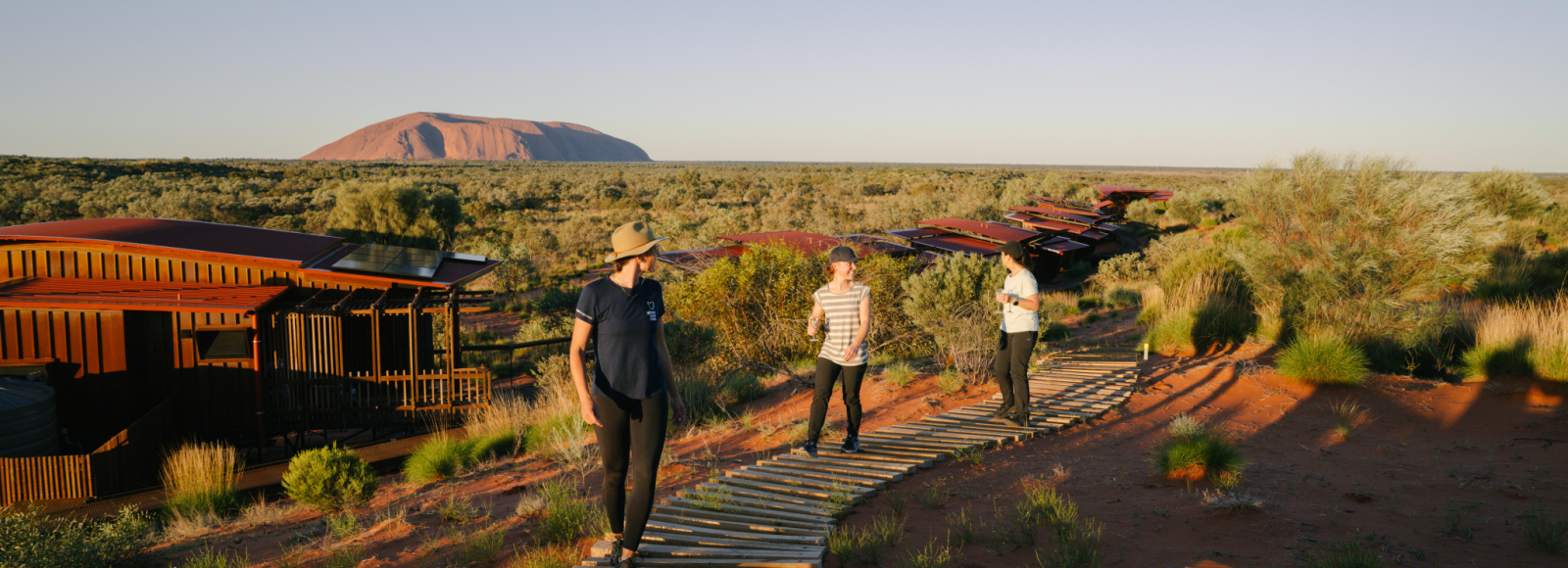


What does visitor accommodation look like on an immersive desert journey through Anangu country?
Tour operator Tasmanian Walking Company offers small-group walking trips specially curated to connect travellers to Country, whilst offering authentic local hospitality and thoughtfully designed accommodation.
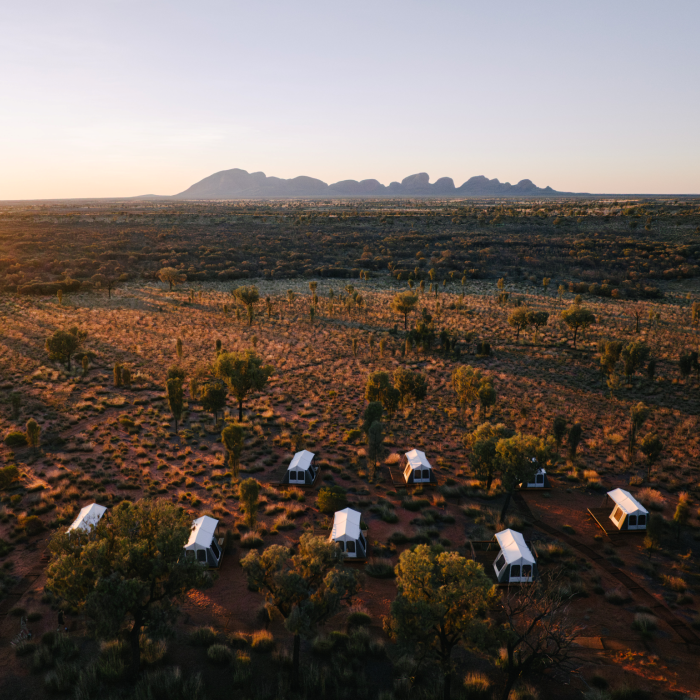
Its newest adventure is the Uluṟu-Kata Tjuṯa Signature Walk, a five-day walking experience in the World Heritage-listed Uluṟu–Kata Tjuṯa National Park. The Walk was developed in partnership with the Anangu people, the traditional landowners of the Park.
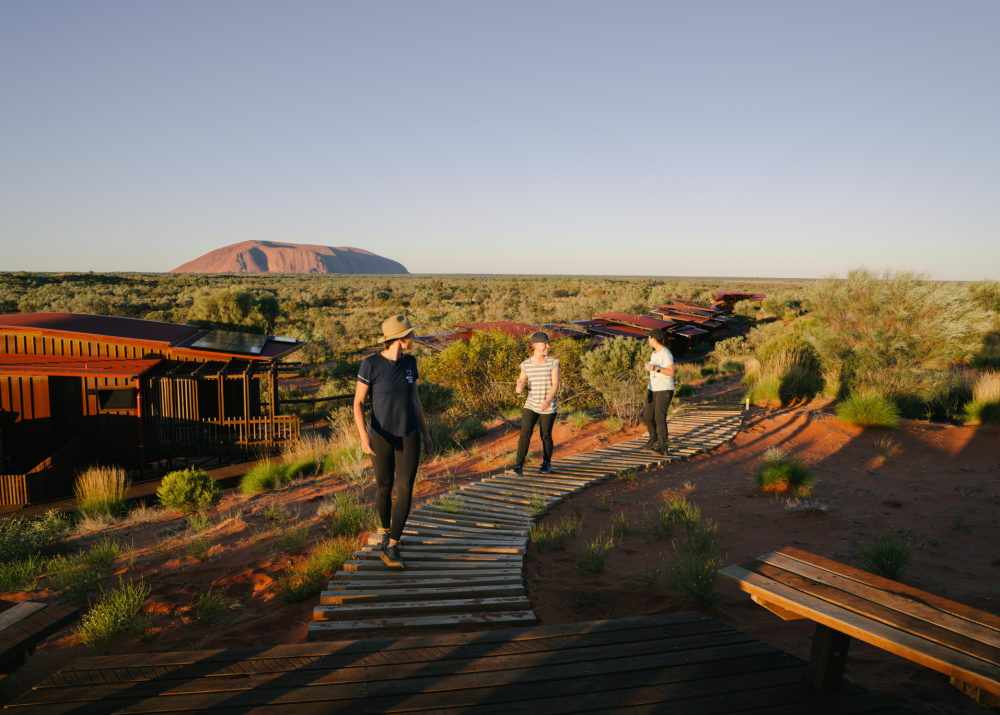
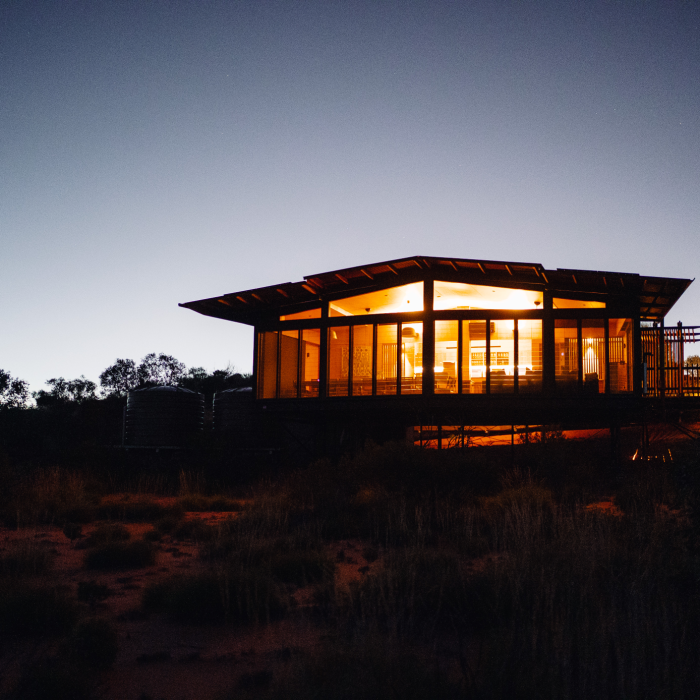
The Walk is a fully guided 54km journey that begins at the base of the towering domes of Kata Tjuṯa and travels east to Uluṟu. Each day ends at either secluded eco camps or the Private Lodge, a series of modular accommodation pods each offering sweeping views of the two geological wonders.
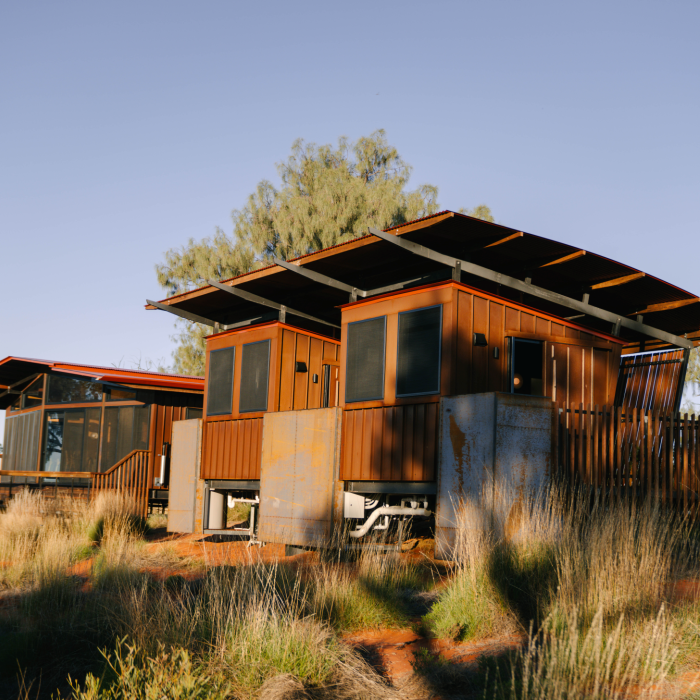
LYSAGHT CUSTOM ORB® and KLIP-LOK® roof cladding is used on most of the accommodation pods, selected for their constructability, longevity and durability in harsh desert conditions.
Over 3,200 sqm of LYSAGHT CUSTOM ORB® roofing is used on most pods for the lounge and dining areas. This iconic LYSAGHT® corrugated roof profile delivers a pleasing textural visual with its uniform ‘ripple’. To complement it, approx. 200 sqm of LYSAGHT KLIP-LOK® roofing was specified for the kitchen modules – a profile ideally suited for near-flat roof sections with substantial, bold ribs rising from wide fluted pans. Together, the two profiles work harmoniously to create a coherent aesthetic.
Additionally, both roof profiles are manufactured from COLORBOND® steel with a double-sided finish in custom Etna Red™. Purposely chosen for its ability to reflect the ochres of its surroundings, Etna Red™ helps convey warmth and continuity with the landscape for visitors.
Delivered over a three-year period, the project brought together Harrold & Kite as lead contractor, Troppo Architects as design architect, and Ausco Modular for modular construction.
How can buildings be designed to sit gently within a natural environment?
Set deep within the Park, the accommodation pods presented a unique combination of design, construction and performance challenges. The demanding setting shaped everything from material selection and project delivery to the long-term performance of the finished buildings.
Despite logistical and environmental challenges, the pods stay true to the original architectural intention: in harmony with their surrounding landscape – a fragile, ancient desert – further enhanced by the building materials, which behave and age naturally.
The choice of CUSTOM ORB® for most of the roof cladding was a deliberate balance of performance and aesthetics. Its iconic corrugated profile is unmistakably Australian and evokes the rural outbuildings – shearing sheds and water tanks – dotting the surrounding landscape.
“CUSTOM ORB® provided a sense of familiarity that was core to this project. We wanted the architecture to feel like it belonged to the outback vernacular rather than reading as an imported or overly refined built form. The fine ripple of CUSTOM ORB® allows the roof to sit gently within the landscape, rather than stand apart from it,” said Ryan Horsnell, Senior Architect at Troppo Architects.
The roof pairs beautifully with the custom wall cladding that forms the primary external envelope of each pod, manufactured from REDCOR® weathering steel. This material develops a distinctive protective, rust-like patina when exposed to the elements, allowing it to harmonise with the Etna Red™ roof finish.
Not only does the roof cladding allow the building to visually merge with the dune landscape over time, but it also provides enhanced durability and is robust against impacts during transport and installation.
How are modular pods transported and built in the Australian outback?
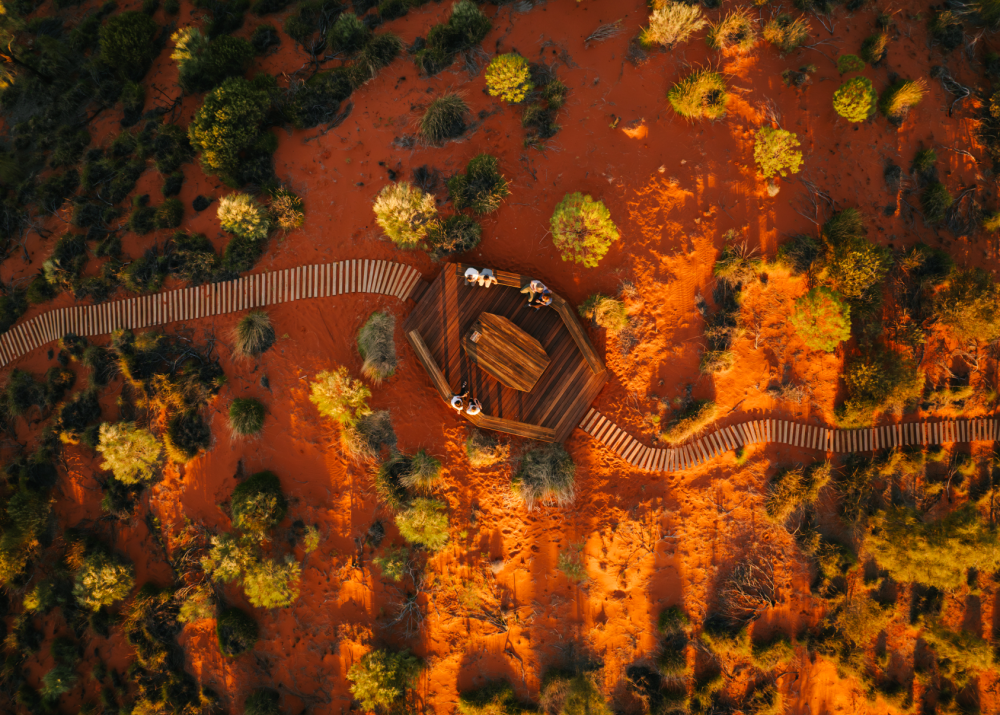
Construction sequencing was carefully staged to minimise the environmental impact on the surrounding ecology.
- Establishment of a service shed to act as the site base
- Construction of boardwalks to access dune systems
- Installation of services beneath walkways
- Manual transportation (hand-carry) of materials across sensitive terrain
- Airlifting of modular pods to situate them into position
- Installation of roofs and fly structures
With no direct road access to the site, each pod was delivered via a fully modular airlift construction system – a significant undertaking that required meticulous planning between all parties involved.
Air transportation proved to be the most efficient way to install the pods, made possible by the long-span capability and relatively low mass of both CUSTOM ORB® and KLIP-LOK®, keeping each pod’s overall weight within strict lift limits.
55 modules were prefabricated offsite and transported by road train to the nearest town, Yulara, a 20-minute drive from the Park. Prefabrication offered significant benefits, including enhanced material quality control and reduced environmental impact by minimising on-site construction activities.
The pods were then flown to the site by specialist Aerotech pilots in heavy-lift Black Hawk helicopters from staging areas. Transportation had to be carefully coordinated within a limited operational window, as helicopters were available only during a brief period between the Australian and Indonesian fire seasons.
The Uluṟu-Kata Tjuṯa Signature Walk features a carefully designed system of lightweight, removable architecture that integrates seamlessly into a World Heritage landscape. It is environmentally restrained, culturally grounded, and designed to age gracefully within one of the most remote and fragile environments in Australia.