How Roof Design Shapes Hospitality Architecture
The Tolpuddle Vineyard Tasting Pavilion in Richmond, Tasmania, designed by Tanner Architects, uses LYSAGHT® SPANDEK® to define a simple, contemporary roof form within a rural vineyard setting. The square-corrugated steel profile supports the project’s restrained architectural language while enabling clean roof lines and integrated rainwater management. Recognised as a finalist in the People’s Choice Award component of the 2025 Lysaght Inspirations Design Awards, the pavilion demonstrates how thoughtful roof design, material pairing and passive performance strategies can deliver a durable, site-responsive hospitality building.
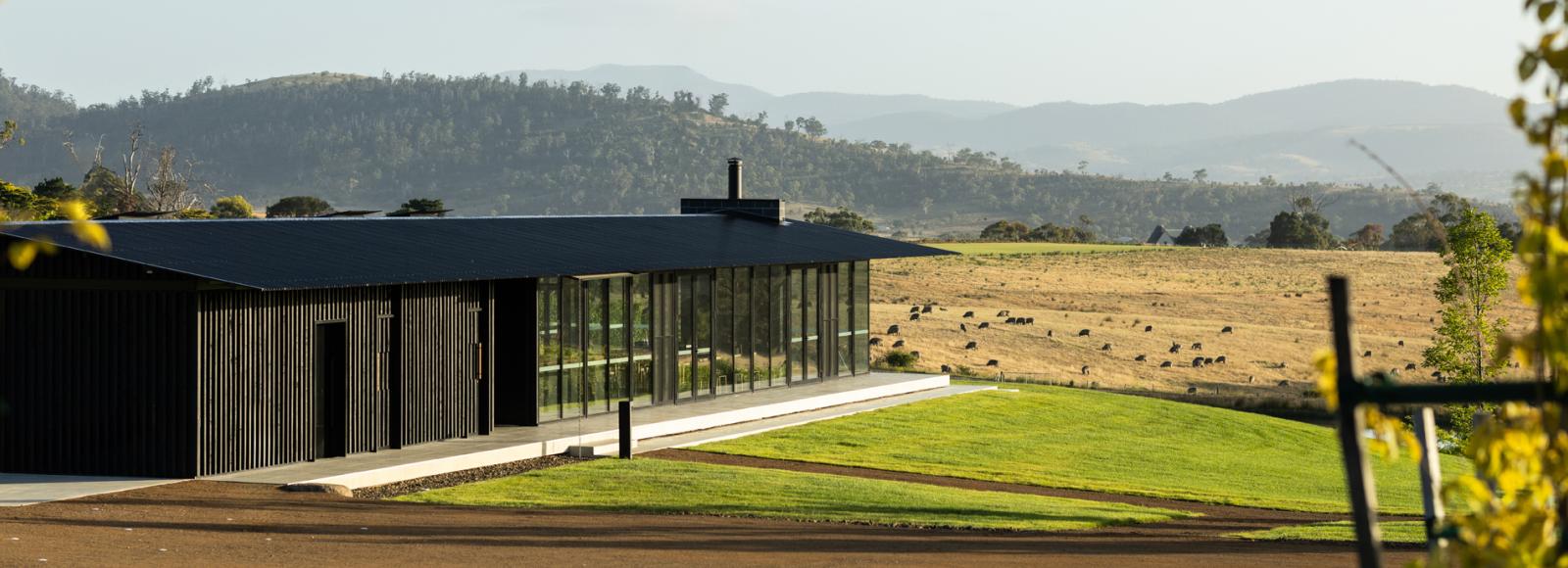
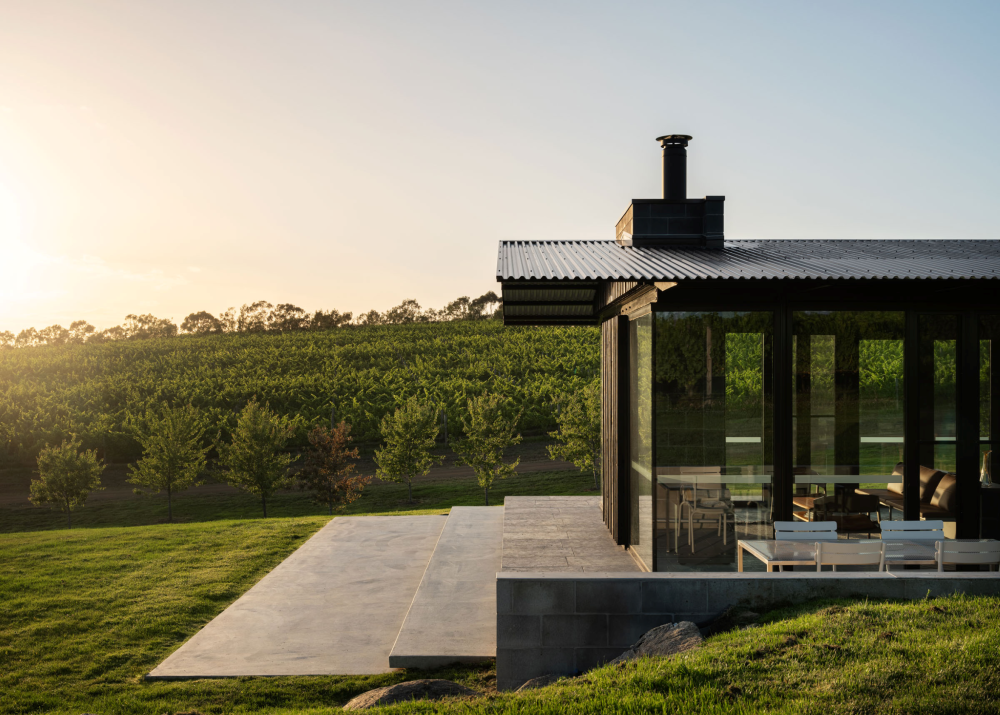
Set among the vineyards outside Richmond, Tasmania, the Tolpuddle Vineyard Tasting Pavilion occupies a gentle slope of chardonnay and pinot noir. The building is modest in scale and deliberately understated, allowing the vineyard landscape to remain the dominant presence. Designed by Tanner Architects for Shaw & Smith, the pavilion was conceived to sit lightly within its surroundings rather than announce itself.
The project was named a finalist in the People’s Choice Award component of the 2025 Lysaght Inspirations Design Awards, recognising a design that pairs disciplined form with carefully considered material choices.
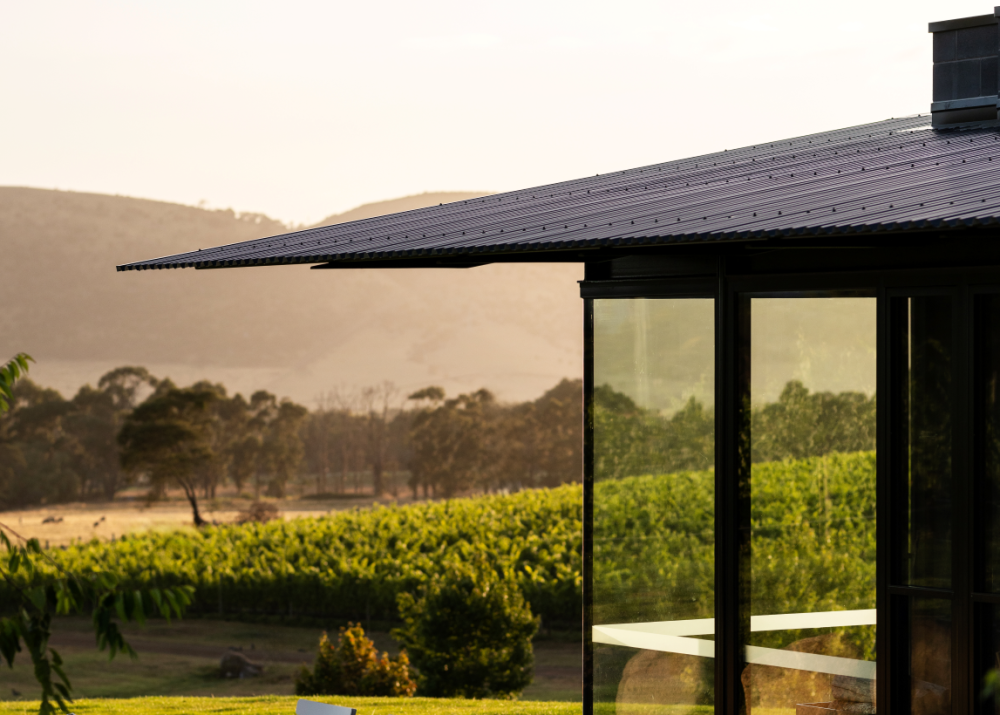
At the centre of the building’s expression is its roof, clad in LYSAGHT® SPANDEK®. The square-corrugated steel profile establishes the pavilion’s strong horizontal line and plays an important role in shaping the building’s character.
A contemporary take on the rural shed
The pavilion sits within a working vineyard where the surrounding environment is the primary attraction. For the architects, this meant the building needed to maintain a quiet presence within the landscape.
As Tanner Architects explain, the intention was that the structure should “reflect a humility and low-key feel in keeping with its surroundings.”
Working with a modest budget, the design focused on clarity rather than complexity. The concept revolves around two defining elements.
“Focusing on a beautiful roof, and a beautiful floor, the concept is summed up as a sophisticated shed.”
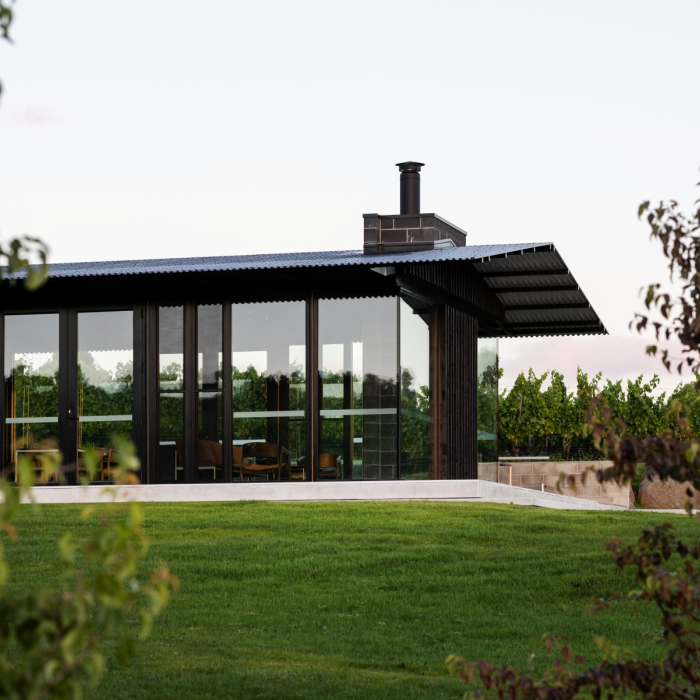
The building is organised along a simple linear plan. A breezeway divides the tasting space from the storage and service areas at the rear, allowing the program to be separated while maintaining a single continuous roofline across the structure.
This straightforward arrangement helps the pavilion settle naturally into the vineyard setting.
Why SPANDEK® suited the project
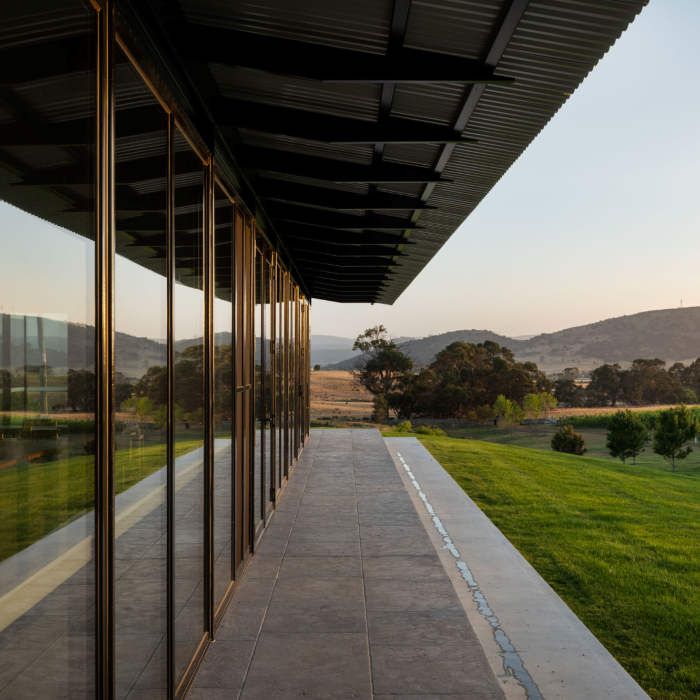
Cladding the roof in LYSAGHT® SPANDEK® reinforces the building’s clear architectural language. The square-corrugated profile introduces a distinct linear rhythm across the roof plane while referencing the agricultural buildings common to rural landscapes.
SPANDEK® is widely specified for roofing and wall cladding where structural rigidity, durability and efficient coverage are required. Its defined geometry allows the roof to read as a continuous plane across the pavilion.
At Tolpuddle, this steel roof contrasts with the vertical macrocarpa timber boards that form the wall cladding. The timber, stained black, introduces depth and texture while reinforcing the building’s agricultural character.
The pairing of these materials keeps the palette restrained while allowing each element to play a clear role in the composition.
Roof design as part of the water strategy
One of the pavilion’s most distinctive features lies in its approach to rainwater management.
Rather than incorporating conventional gutters, the roof edge has been designed so rainwater falls directly from the perimeter of the building. The shallow pitch of the SPANDEK® roof slows the flow, allowing water to drop steadily from the edge before being directed to a lower graded platform and collected for reuse within the vineyard’s irrigation system.
The architects describe the decision clearly:
“Stormwater is allowed to waterfall from the edge of the corrugated roof and the low pitch slows the flow to drip gently off the roof edge.”
At the breezeway entry, this edge condition changes. A folded gutter and chain interrupt the roofline to create a clear threshold while maintaining the broader drainage strategy.
The approach demonstrates how roof design, material selection and site infrastructure can work together as a single system.
Environmental grounding and material reuse
Many of the project’s decisions were made on environmental grounds.
An insulated wall system helps stabilise internal temperatures at around 15–16°C without the need for mechanical cooling. This supports both wine storage and visitor comfort.
The concrete floor slab incorporates integrated heating powered by solar energy generated on the nearby machinery shed roof, helping offset the building’s operational energy demand.
Material reuse also became an important part of the project. Redundant macrocarpa timber sourced from a farm in northern Tasmania was salvaged, milled and left to dry naturally before being stained and installed as the pavilion’s exterior cladding.
Inside the building, Tasmanian Hydrowood is used for joinery, tabletops and window seating, introducing another locally sourced material into the project.
These choices reinforce the pavilion’s connection to its regional landscape while reducing the need for newly harvested resources.
A quiet architectural presence in the vineyard
The Tolpuddle Vineyard Tasting Pavilion demonstrates how restraint can shape a building’s character. The building sits low within the landscape, allowing the vines and rolling terrain to remain the focus.
Within this composition, LYSAGHT® SPANDEK® plays a defining role. The profile gives the roof its clear, linear expression while providing the durability required in an exposed rural setting.
Recognised as a finalist in the People’s Choice Award component of the 2025 Lysaght Inspirations Design Awards, the project shows how a contemporary steel profile can contribute to architecture that is practical, carefully detailed and closely connected to its environment.
Frequently Asked Questions
SPANDEK® was chosen for its square-corrugated geometry, which provides a strong, defined roof expression while maintaining a contemporary appearance. The profile delivers structural rigidity and efficient coverage, making it well-suited to projects where the roof is a key architectural element.
For more on SPANDEK® visit here.
The pavilion uses a controlled roof-edge detail that allows rainwater to fall directly from the edge of the SPANDEK® roof plane. Water is directed to a lower graded platform and collected for reuse within the vineyard irrigation system. A folded gutter and chain detail at the breezeway entry provides a controlled break in this edge condition.
Projects that use exposed roof edges require careful coordination between the roofing profile, edge flashing and drainage strategy. Ensuring continuous runs of SPANDEK®, precise edge folding and well-resolved transitions at entries or openings helps maintain a crisp architectural line while supporting effective water management.
Beyond the roofing profile itself, overall building performance depends on the complete envelope system. Insulation, wall construction, ventilation strategies and thermal mass all influence interior comfort. In the Tolpuddle pavilion, an insulated wall system and heated concrete slab help maintain stable internal conditions while the steel roof provides a durable, low-maintenance external skin.