Proper handling of cladding on-site is important for worker safety, product integrity, efficient installation and compliance. This article is a guide to handling cladding on-site safely and effectively, with details on recommended installation methods and damage-prevention techniques.
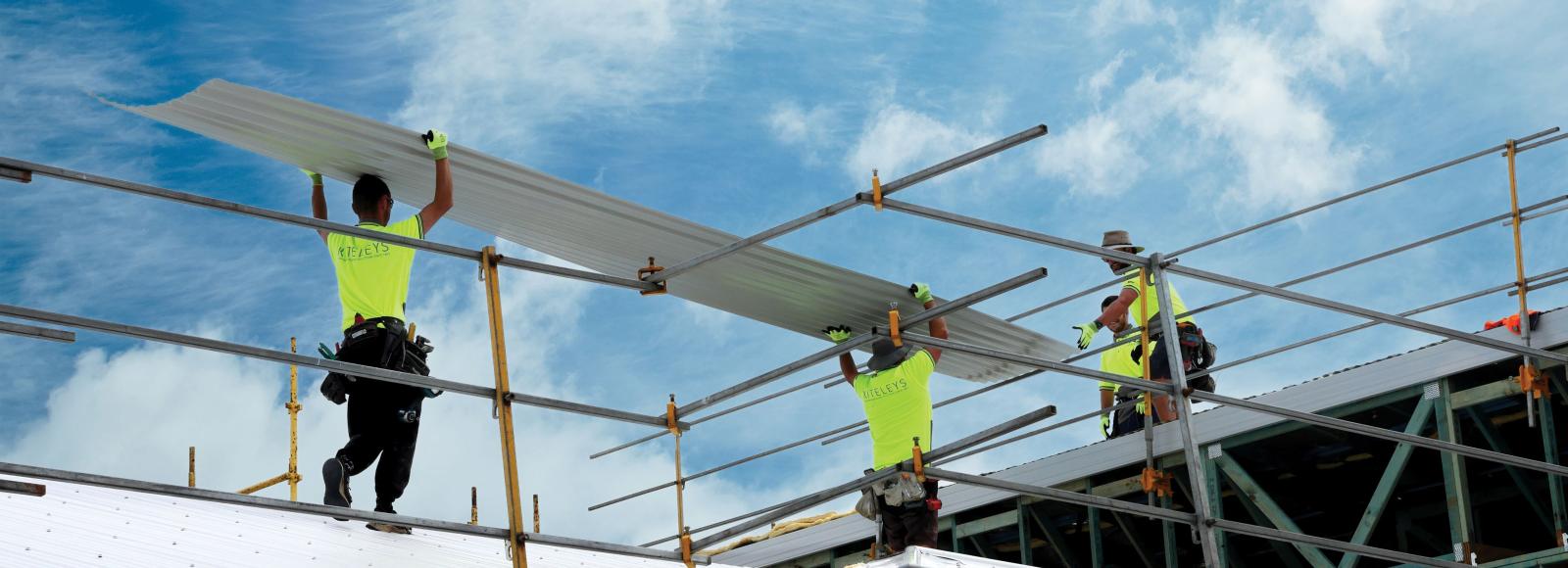
Handling cladding onsite
The correct handling of cladding onsite is important for worker safety, product integrity, efficient installation and compliance. This article is a guide on how to handle cladding onsite safely and effectively.
Safety precautions when handling cladding onsite
Cladding products may be sharp and heavy. When handling cladding onsite, it is recommended that heavy-duty cut-resistant gloves and appropriate manual handling techniques or a lifting plan be used when handling material.
Always take care when walking on wet or newly laid sheets, particularly on steeply pitched roofs. Do this by keeping your weight evenly distributed over the soles of both feet. Always wear smooth soft-soled shoes.
Occupational health and safety laws enforce safe working conditions in most locations. Laws in every state require you to have fall protection which includes safety mesh, personal harnesses and perimeter guardrails.
Be fully aware of all local codes of safe practice and strictly comply to all laws that apply to your site.
Best practice installation methods
For roofing or walling installations not at ground level on large building projects, you can reduce handling time of roofing sheets onsite by lifting bundles with a crane directly from the delivery truck onto the roof frame. Use a spreader bar for long sheets.
For small to medium-sized projects, without mechanical handling facilities, you can unload sheets by hand and pass them up to the roof one at a time. Remember, the product can be sharp and heavy, so be sure to wear PPE and follow appropriate manual handling techniques.
Why damage prevention is important
Preventing cladding damage is important for protecting the product's integrity and extending the material's lifespan.
Before installation, rain or condensation can be easily drawn between the surfaces of stacked sheets. This trapped moisture cannot evaporate easily and can cause the coating to deteriorate. Make sure to stack materials neatly with minimal exposure to weather elements.
Carry all tools instead of dragging them. This also helps prevent cladding damage.
Maintaining and cleaning LYSAGHT® cladding is relatively straightforward. Read more about how a little care can reap great results: Maintaining and cleaning LYSAGHT® cladding
Common mistakes to avoid
- Dragging materials over rough surfaces or each other
- Cutting or modifying products incorrectly
- Storing materials in exposed conditions
- Leaving incomplete work unprotected
Good cladding handling is about safety, compliance, performance and appearance. Following the correct procedures ensures superior functionality and durability for years to come.
For more details on general care, handling, storage, installation and maintenance considerations of LYSAGHT® cladding products, refer to the Product Advisory Bulletin.
Frequently Asked Questions
For a full demonstration of the recommended installation process for our cladding products, watch the official instruction videos.
We recommend that all claddings are inspected for the deposition of any debris, dust, pollutants, or organic growth prior to installation. For more information, read our Support Article, Inspection & Maintenance Roofing.
We also recommend that when maintaining the roof, care should be taken to not damage the surface of the cladding, gutters, and flashings. For more information, read our Support Article, Roof Access, Safety and Walking on the Roof During Maintenance.
Visit the Lysaght website for full descriptions of all LYSAGHT® walling, cladding and facade products: LYSAGHT | Walling & Cladding Solutions
Read our Product Advisory Bulletin, PAB07 General Care, Safety and Handling of LYSAGHT® Cladding Products, on our website here: PAB07 General Care, Safety and Handling of LYSAGHT® Cladding Products.