A rainwater system earns its keep at the roof edge. It should catch the run-off, get it into the roof gutter, and send it on its way before water hangs around.
When something is off, you usually notice it in ordinary places first. A damp mark under an eave. A faint stain down a wall. Timber that looks a little puffed up near the roofline.
Once you understand what each piece is responsible for, those small signs make more sense, and it’s easier to stay ahead of bigger issues.
What makes up a rainwater system
Most homes use a straightforward set-up. It’s not complicated, but it does rely on each part doing its job. Rain lands on the roof catchment and runs towards the roof gutter. From there it moves into downpipes, then out to a discharge point such as stormwater plumbing or a rainwater tank.
The system behaves like a chain. If one link slips, the rest feels it. A blocked roof gutter, a join that has started to weep, or a downpipe that cannot shift water fast enough can all send water where you do not want it, back towards the eaves and over the edge during a heavy burst of rain.
How fascias and gutters work together
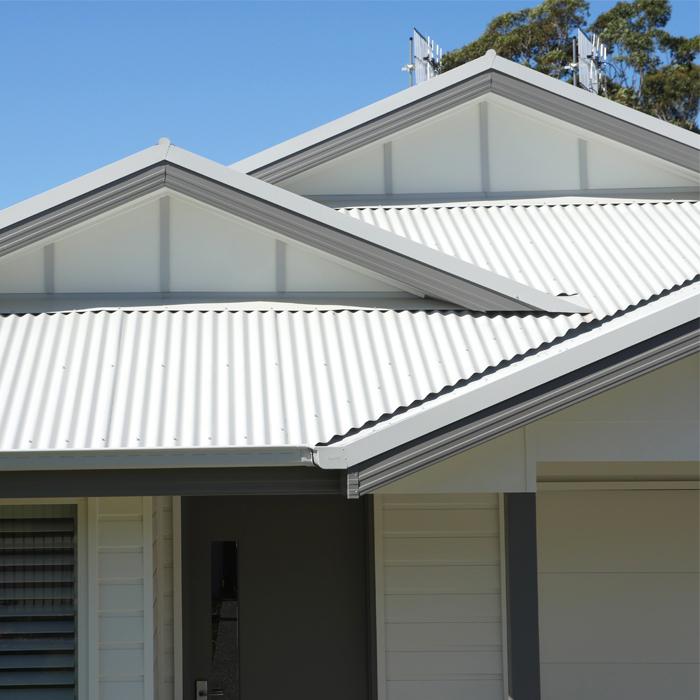
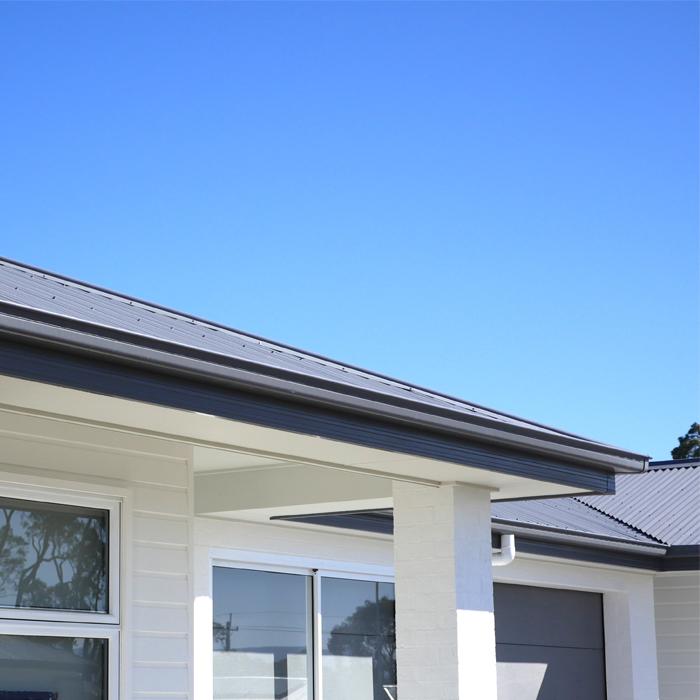
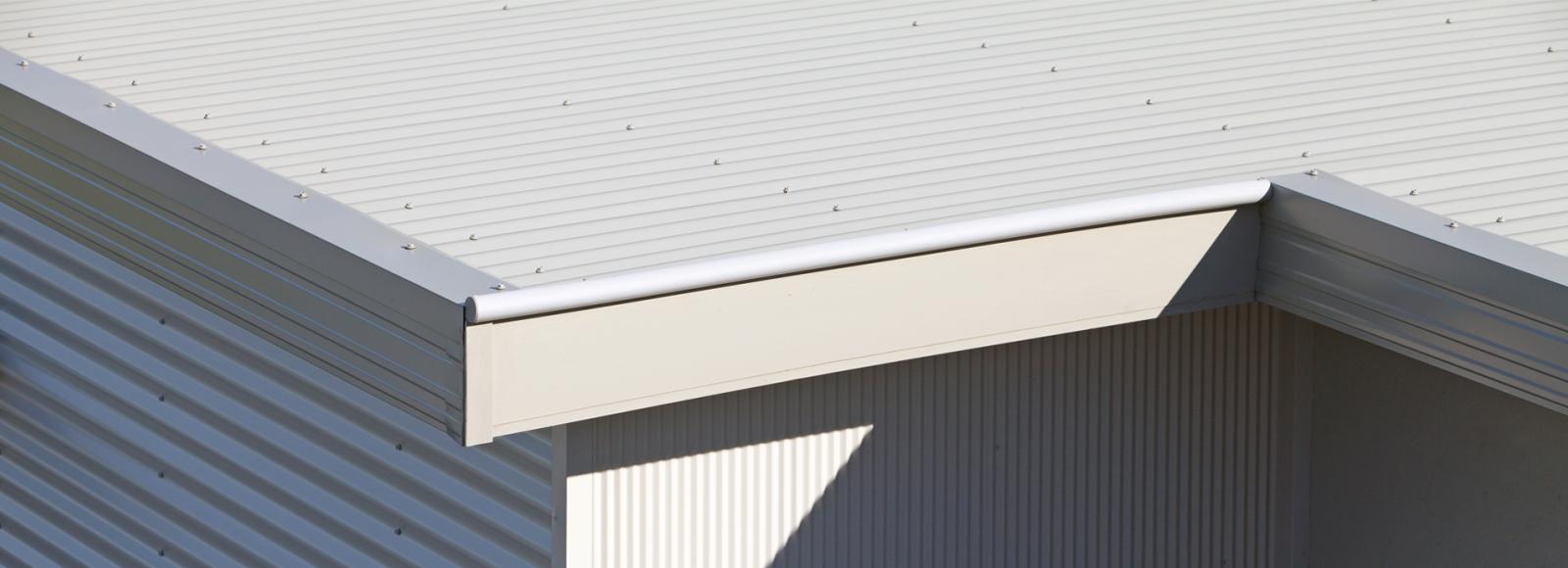
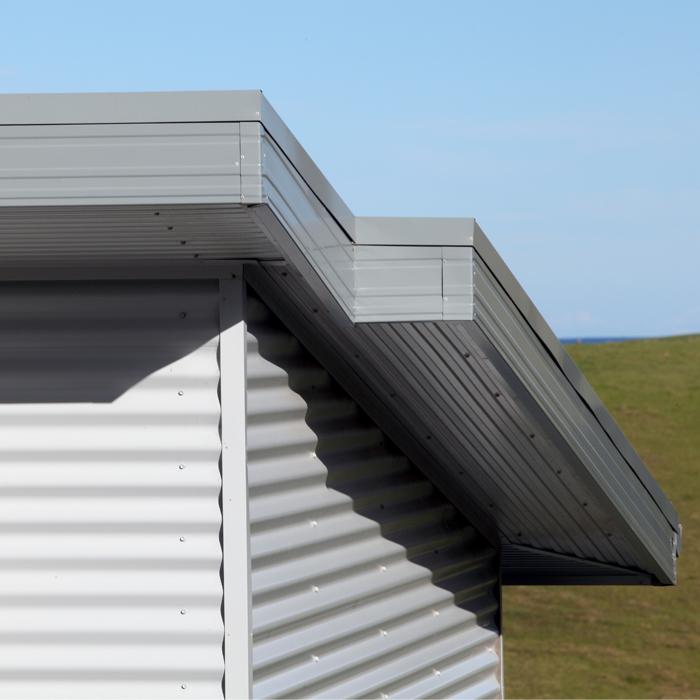
The fascia is the board or metal section that runs along the roof edge. It creates a straight fixing line for the gutter and finishes the roof perimeter neatly. On many homes, a fascia gutter is fitted so the gutter sits flush along the roof edge, catching run-off cleanly and feeding it towards the downpipes.
The slope matters more than most people realise. Too flat, and the roof gutter holds water long enough for sediment to settle. If the fall is too steep, water can surge straight past the outlet when rainfall is heavy and spill over the front.
When fascias and guttering are installed straight, supported properly, and tied together cleanly, water tracks to the outlets the way it should, and the roofline reads as crisp and even. When they are not, the same tells keep returning.
Where problems usually start
Most rainwater system issues tend to show up in the same places:
- Build-up in the roof gutter: Roof valleys and sections beneath overhanging trees tend to collect leaves, grit and roof debris first. Once that layer forms, water slows down and overflow becomes more likely in heavy rain.
- Downpipes that cannot keep up: If downpipes are undersized, too widely spaced, or simply not positioned where the main run-off hits the gutter, the system can fall behind quickly. In a sharp downpour, the gutter fills faster than it drains, and the water has only one direction left to go.
- Joints, corners and outlets: Gutters move. Heat, cold, and the weight of water all take turns at the fixings. Over time, that movement can open up a corner, loosen a bracket, or crack a seal, and a small drip becomes a regular one.
- Corrosion in exposed areas: Harsh Australian conditions can speed things up, especially near the coast where airborne salts are part of the air. Corrosion often starts at cut edges, laps, and around fixings, and it can shorten the working life of fascias and guttering if it is left unchecked.
After severe weather, a lap of the house is usually enough to spot trouble early. Look for water marks along the fascia line, damp patches near eaves, fresh staining under gutter joins, or soil washed out where downpipes discharge.
Those signs often point to a fix that is still straightforward, if it is handled early.
Choosing materials for Australian conditions
Australia does not give roof-edge components an easy run. Hot summers, UV, sudden downpours, and salty coastal air all place steady pressure on finishes and fixings, so materials need to suit the conditions they are sitting in for decades.
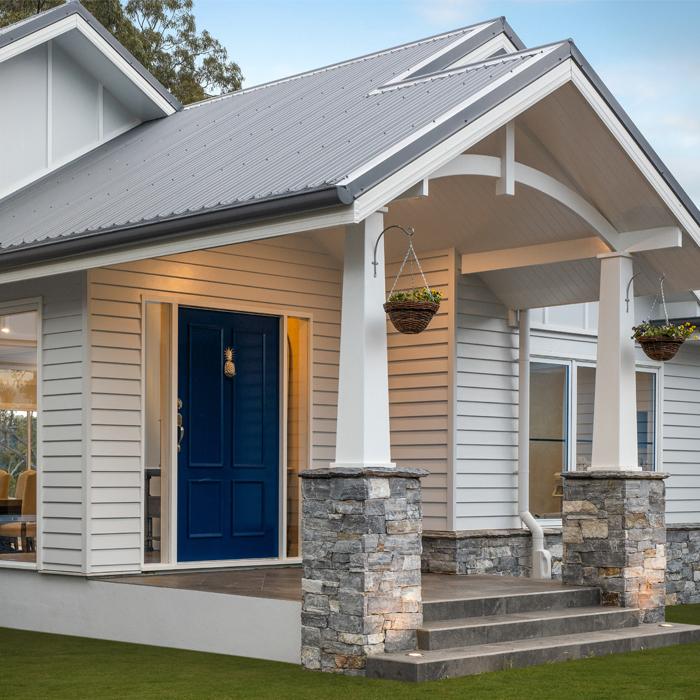
Many homeowners prefer systems made from high quality steel, particularly when they want a consistent finish across roof drainage and roof-edge detailing. COLORBOND® steel is designed and tested for a wide range of Australian environments.
As with any building product, the right option depends on your site and exposure. Coastal and industrial locations can require extra consideration, so it is worth seeking professional advice before you lock in materials.
Colour, heat and roof-edge performance
At the roof edge, heat load matters. Darker colours usually pull in more warmth, and that can lift temperatures around the roofline, particularly on still, sunny days. Colour choice also affects how the roof gutter and fascia area looks over time, particularly where airborne dust and debris collect.
Every standard COLORBOND® steel colour includes Thermatech® solar reflectance technology in all colours except Night Sky®. Thermatech® technology is designed to reflect more of the sun’s radiation, which can help reduce heat absorption at the roofline.
In practical terms, choosing colours and materials with thermal performance in mind can support indoor comfort and reduce heat stress on roof-edge components, without leaning on inflated claims.
Roof profiles and clean water flow
Roof design influences how water arrives at the edge, not just how it looks from the street. Some profiles channel water in defined paths, while others spread it more broadly across the roof surface. That affects how evenly the roof gutter takes water and how quickly the system needs to clear it during heavy rainfall.
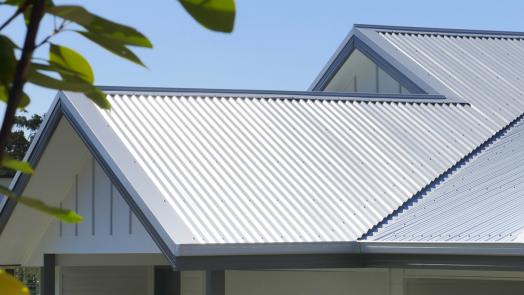
Architectural profiles such as LYSAGHT ENSEAM®, part of the LYSAGHT ZENITH® range, are shaped with defined lines and controlled detailing that helps guide run-off towards the gutter line in a more consistent way.
When roof shape, overflow control, and fascia gutter detailing are planned as one, drainage tends to be calmer and more reliable when the weather turns.
Practical maintenance
Rainwater systems work best when they are kept clear. Routine maintenance is not about constant attention, but about regular checks that stop small issues from becoming persistent ones.
As a baseline, clear the roof gutter at least twice a year, and more often where trees drop material onto the roof. While doing so, make sure brackets are secure, joints are tight, and the gutter is draining evenly rather than holding water in one section. Downpipes should be clear and directing water away from the house at ground level.
Beyond that, the focus is consistency. A reliable system comes from adequate gutter capacity, fascias and guttering that remain straight and well supported, downpipes sized to suit local rainfall, and materials chosen for Australian conditions. When the system is maintained as a whole, water is managed quietly and predictably, without drawing attention to itself.