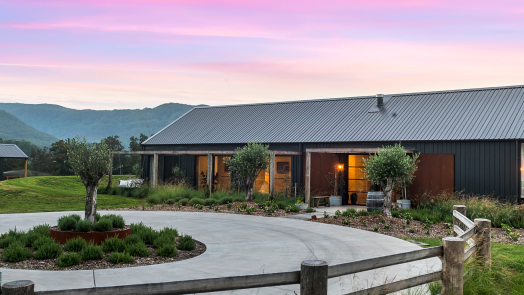
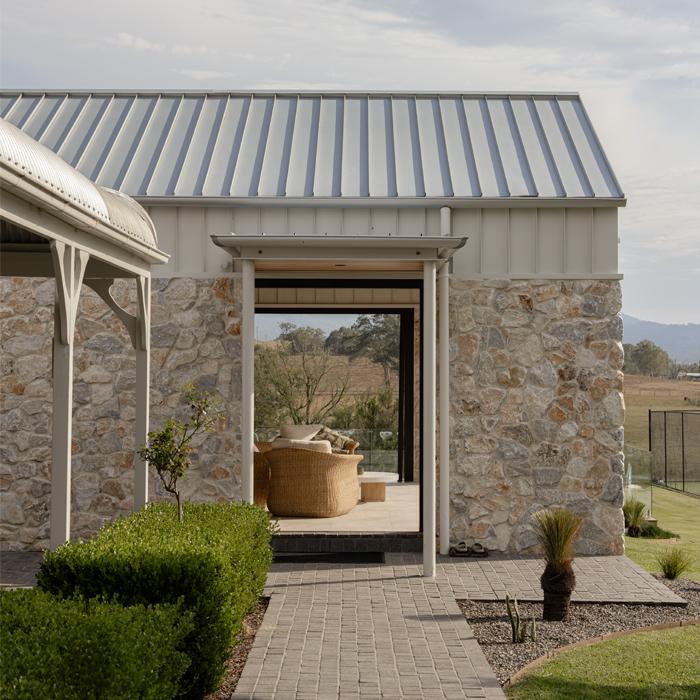
Fishers Hill House extends a 1910s farm cottage with a contemporary addition that respects its rural setting. Using LYSAGHT ENSEAM® cladding, the design introduces clean vertical lines, durable performance and a clear distinction between old and new.

Set within a quiet rural pocket near Gloucester, NSW, Fishers Hill House extends an early 20th-century farm cottage with a new architectural layer that feels settled into place. The project, submitted to the 2025 Lysaght Inspirations Design Awards, approaches the site with restraint, balancing the character of the original dwelling with the expectations of contemporary living.
Zinc Design Studio, working with Keepr Built, positioned the addition to take in broad views across the surrounding farmland. At the same time, it maintains a clear visual connection back to the existing cottage. This relationship underpins the project. The new work does not try to dominate or reinterpret the site in a dramatic way. It sits organically within the existing setting.
Modern response to a heritage setting
The starting point was the original 1910s structure. Its weatherboards and corrugated roof established a familiar rural language, but the intent was never to replicate it directly. Instead, those elements were adjusted, simplified and reworked to suit a contemporary extension.
“The addition combines modern detailing with a material palette that reflects and reinterprets the traditional rural vernacular,” says Zinc Design Studio Director and Owner, Harrison “Harry” Daly.
The result is a clear distinction between the two parts of the house. The addition reads as new, but not disconnected. It carries forward certain proportions and cues, while resolving its own set of requirements.
Why LYSAGHT ENSEAM® was selected
LYSAGHT ENSEAM® wall cladding becomes a key part of that shift. As part of the LYSAGHT ZENITH® range, it brings a level of control to the external envelope that aligns with the overall approach.
In this project, ENSEAM® supports both the architectural intent and the practical requirements of the addition through:
- Vertical standing seams that introduce a clear contrast to the cottage’s horizontal lines
- Broad flat pans that create a restrained surface with subtle depth
- Concealed fixing system that maintains a clean, uninterrupted finish
- Consistent geometry that helps define the addition as a distinct volume
- Material durability suited to exposed regional conditions when manufactured from COLORBOND® steel.
The vertical standing seams contrast with the horizontal emphasis of the original cottage. It is a simple move, but it changes how the addition is read. The new volume feels more upright, more defined, without needing additional articulation.
There is also a quietness to the profile itself. Flat pans sit between raised seams, catching light differently across the day. In some conditions the surface appears almost uniform. In others, the seams become more pronounced. That variation gives the façade a sense of depth without adding complexity.
From a performance perspective, ENSEAM® also suits the conditions. Manufactured from materials such as COLORBOND® steel, it provides a durable outer layer suited to regional exposure, which is a practical consideration as much as an aesthetic one.

Material contrast and balancing the elements
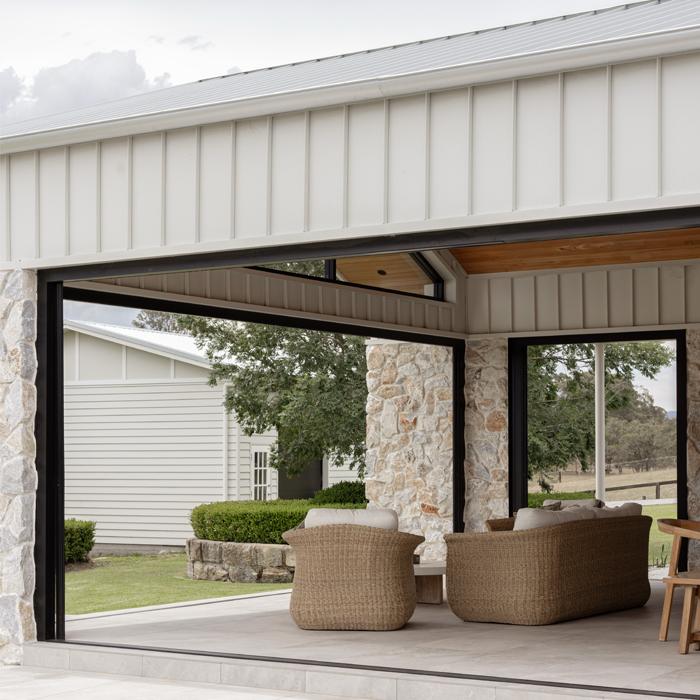
The material palette is limited, but not minimal for its own sake. ENSEAM® cladding is paired with natural stone and blackbutt timber, each introduced with a clear purpose.
Daly describes the cladding as providing “a clean, durable, and refined surface treatment that contrasts and complements the natural stone and warm blackbutt timber elements.”
The steel sets out the geometry of the building. The stone adds weight and permanence. Timber softens the transitions, particularly where the building meets the landscape. None of these elements are overworked. Their roles are quite direct, and that clarity carries through the project.
Designed for light, views and everyday use
Internally, the planning is relatively straightforward. What matters more is how the spaces relate to the site. Openings are placed to frame long views across the property, so the landscape remains present from within the house.
Light enters from multiple sides, shifting across surfaces as the day progresses. There is no strong reliance on feature moments or formal gestures. Instead, the experience is shaped by alignment, proportion and material.
As Daly puts it, the outcome is “a modern addition that sits comfortably within the landscape, drawing a clear dialogue between old and new while enhancing the lived experience of the property.”
A considered addition to the rural landscape
Fishers Hill House is measured in how it approaches its context. It avoids direct imitation, but it also avoids unnecessary contrast. The design sits somewhere in between, where decisions around proportion, material and detailing carry more weight than formal expression.
Within that, LYSAGHT ENSEAM® does a specific job. It gives the addition a consistent surface and a clear reading, helping define the newer parts of the building without overwhelming the existing cottage.
As a submission to the 2025 Lysaght Inspirations Design Awards, the project offers a useful reference point for how standing seam cladding can be applied in a rural setting. The outcome is resolved, but not overstated, and remains closely tied to the conditions in which it sits.

Frequently Asked Questions
The project was conceived as a contemporary addition to an existing 1910s farm cottage. Rather than replicating the original structure, the design reinterprets its key elements through updated proportions, detailing and materials, allowing old and new to sit together with clarity.
LYSAGHT ENSEAM® was selected for its ability to deliver a clean, controlled finish suited to contemporary architecture. Its standing seam profile introduces a clear vertical rhythm, helping distinguish the addition from the original cottage while maintaining a cohesive overall composition.
The profile’s flat pans and raised seams create subtle shadow lines that shift throughout the day, adding depth without additional detailing. This allows the building to maintain a restrained expression while still responding to changing light conditions.
Yes. When manufactured from materials such as COLORBOND® steel, ENSEAM® provides a durable external cladding solution designed to perform in Australian conditions. This makes it well suited to rural and exposed sites where longevity and reliability are important.
The project combines ENSEAM® cladding with natural stone and blackbutt timber. The steel defines the building’s form, while the stone and timber introduce texture and ground the structure within its rural setting. Together, these materials create a balanced and contextually responsive outcome.