The Australian facade in 2026 is defined by Box Modern geometry, Japandi-influenced dark palettes, and a renewed interest in corrugated steel as a deliberate design material. This piece maps those directions to the LYSAGHT® profiles powering each one, from AZURE® and HORIZON™ through to ENSEAM® and CUSTOM ORB®, and introduces the Design Solutions Group for specifiers ready to take the next step.
Australian facades are getting sharper, darker and more deliberate. Materials are changing and so is the thinking behind them.
At Futurebuild Australia 2026, conversations at the Lysaght stand kept circling the same ground: how steel facades are being specified differently now, how colour and profile selection has become a design decision rather than a procurement one, and what a contemporary Australian exterior actually looks like when the brief calls for something considered.
This piece follows the conversation that shaped the stand at ICC Sydney, from the design directions defining the Australian facade in 2026 to the LYSAGHT® steel profiles supporting each one and the technical guidance that makes specification clear. Whether you visited the stand or you are joining the discussion here, this is where the facade conversation sits today.
Box Modern geometry and the flat-panel facade
The Box Modern movement has settled into Australian residential and light commercial architecture with real confidence. Clean volumes. Flat planes. Recessed joints. Minimal ornamentation. This design language rewards precision, and steel delivers that precision better than most materials.
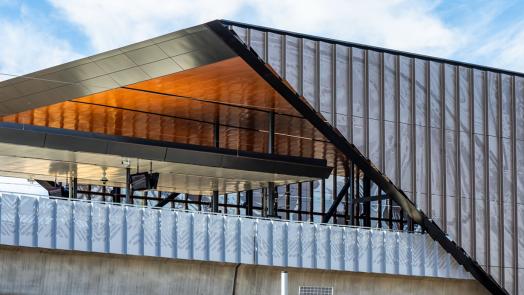
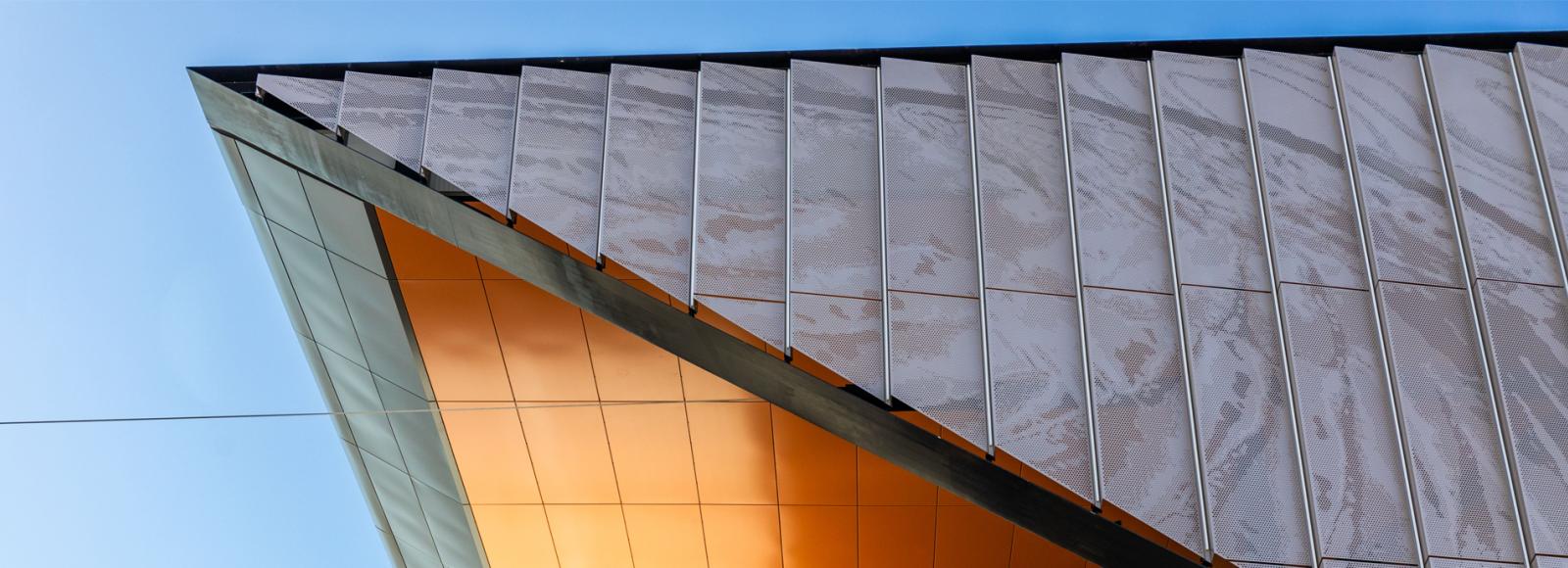
The LYSAGHT® profiles doing the heavy lifting in this space are worth knowing. AZURE® is a cassette-style facade panel that creates bold, block-effect walling with deep recessed shadow lines and concealed fixings. It gives architects precise control over scale and proportion, and its interlocking panel system keeps facade alignment consistent across large elevations. Non-combustible and NCC-compliant, it's specified on projects ranging from civic infrastructure to high-end residential.
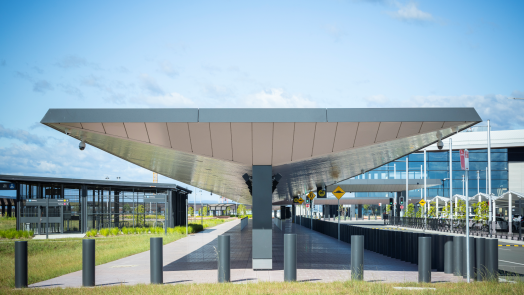
HORIZON™ takes a different approach to the same design language. Its twin-skin, hollow-core construction produces a facade panel that stays flat, even in dark colours where oil-canning is typically a concern. Lightweight yet structurally sound, it can be installed vertically, horizontally or diagonally to create varied visual effects across an elevation. The Western Sydney International Airport is one example of HORIZON™ performing at scale, with the panels installed as soffit lining across the covered walkways.
Both profiles are manufactured from COLORBOND® steel, with performance data from Lysaght's NATA-accredited testing facility. For the specifier, that means independently verified performance figures available before procurement decisions are made.
Japandi restraint and dark, matt palettes
Alongside the formal geometry of Box Modern, there's a quieter movement reshaping Australian exteriors. Japandi-influenced design brings wabi-sabi restraint to the facade: deliberate simplicity, natural-material pairings and palettes that sit back rather than announce themselves.
The shift is visible in colour specification. Mid-tone greys are giving way to warmer darks and earthy neutrals. Basalt®, in particular, has become one of the most frequently specified colours in the COLORBOND® steel range for facade applications. It reads differently depending on light and orientation, which gives it a material quality that mid-tones lack.
The COLORBOND® steel Matt finish range is accelerating this trend. Matt surfaces reduce glare, soften light interaction and carry a tactile appearance that pairs well with timber, concrete and stone. For architects working with mixed-material facades, matt steel provides a visual anchor without competing with the surrounding palette.
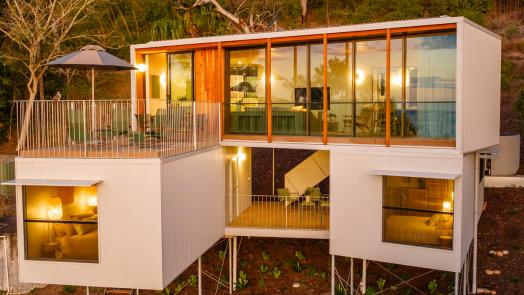
Naya Haus is a residential project that captures this direction clearly. Designed by Lisa Mackee, the home is a Japandi-inspired barn form clad entirely in LYSAGHT® ENSEAM® in COLORBOND® steel Monument® Matt. Deep vertical shadow lines give the facade a refined texture while referencing the barn vernacular, and the dark steel finish anchors the building into its hillside setting. It's a project where the palette and the profile are working together, and neither is incidental.
This isn't a profile-specific trend. It runs across the entire LYSAGHT® facade range. Whether the project calls for the flat planes of AZURE® or the texture of CUSTOM ORB®, the colour and finish conversation is now central to the specification process.
Texture and the lasting power of corrugated steel
Flat, minimal facades are only part of the current picture. There's a parallel move toward deliberate texture and honest material expression, and one LYSAGHT® profile sits at the centre of it.
CUSTOM ORB®. The profile that shaped Australian building is increasingly being specified as a facade material in its own right. Architects are installing it vertically, horizontally and sprung-curved to bring depth, shadow and an honest material expression to contemporary projects.
The corrugated form does something flat panels cannot. It catches light differently across the day, creates depth through repetition and introduces a sense of movement that reads at both street scale and detail scale.
Ripple House by Atlas Architects is a clear example. At this coastal family home in Hampton, Victoria, CUSTOM ORB® walling is used as a primary facade material rather than a background element. The corrugated profile introduces texture and shadow to clean geometric forms, while the COLORBOND® steel finish handles salt-laden coastal exposure with minimal ongoing maintenance. CUSTOM ORB® wasn't the default here. It was the deliberate facade choice.
Available in the full COLORBOND® steel colour range and suited to vertical, horizontal or sprung-curved installation, CUSTOM ORB® gives architects a degree of creative control that belies the simplicity of the profile. Orientation alone changes the character of a facade entirely.
There's a heritage dimension to this that matters. Lysaght has been forming corrugated steel for over 150 years. When an architect specifies CUSTOM ORB® on a contemporary project, they're connecting to a material history that runs through Australian architecture itself.
The support behind the facade
Every profile referenced in this piece has been developed and tested in Lysaght's NATA-accredited research and testing facility. Wind, water, structural load and fire performance are all assessed against Australian Standards, with published data available before specification is locked in.
Lysaght's Design Solutions Group works with architects and specifiers from concept through construction. Whether it's a detailing question on a ventilated rainscreen system, a performance query on wind loading for a specific site, or early-stage advice on which profile suits the design intent, the team is there to support the specification process.
Whether you visited the stand at Futurebuild Australia or are picking up the thread here, the Design Solutions Group is the team to continue the conversation with.
Continue the conversation
The Australian facade is changing. The profiles, the palettes and the thinking behind them are all moving, and steel is at the centre of that conversation.
Download the Modern Steel Exteriors Design Guide for a comprehensive overview of the LYSAGHT® facade range, including profiles, finishes and application guidance.
Or explore the LYSAGHT® facade range online to see the full suite of profiles available for your next project.
Frequently Asked Questions
The COLORBOND® steel Matt finish range includes Basalt® Matt, Monument® Matt, Dune® Matt, Shale Grey™ Matt, Surfmist® Matt and Bluegum® Matt. All are available across the LYSAGHT® facade range. Matt finishes reduce surface glare and carry a softer, more tactile appearance than standard gloss, which is one reason they are increasingly specified on facades where the building sits alongside timber, concrete or stone.
As early as possible. The Design Solutions Group works with architects and specifiers from concept through construction, so they can add the most value during the specification and detailing phases when decisions about profile selection, substructure, junctions and membrane interfaces are still being shaped. That said, the team also supports projects already underway where a technical question needs resolving on site.
LYSAGHT® facade profiles such as AZURE® are manufactured from steel, which is classified as a non-combustible material under the National Construction Code. This means they can be specified on building types and classes where non-combustible external cladding is required, without the need for additional fire testing or exemptions. Published compliance data is available from Lysaght at specification stage.
Yes. Steel facade profiles are regularly specified alongside timber, concrete, render and stone on contemporary Australian projects. The key to a successful mixed-material facade is the junction detailing between materials, which is where the Design Solutions Group can support architects and specifiers. Flashings, expansion tolerances and drainage paths at material transitions all need to be resolved in the detailing phase.
COLORBOND® steel is engineered for Australian conditions, including coastal exposure. Standard COLORBOND® steel is suitable for most residential and commercial projects, while COLORBOND® Ultra steel is recommended for sites closer to the coast where salt spray exposure is higher. Lysaght can advise on the appropriate grade for a specific site based on its distance from breaking surf and prevailing wind conditions.